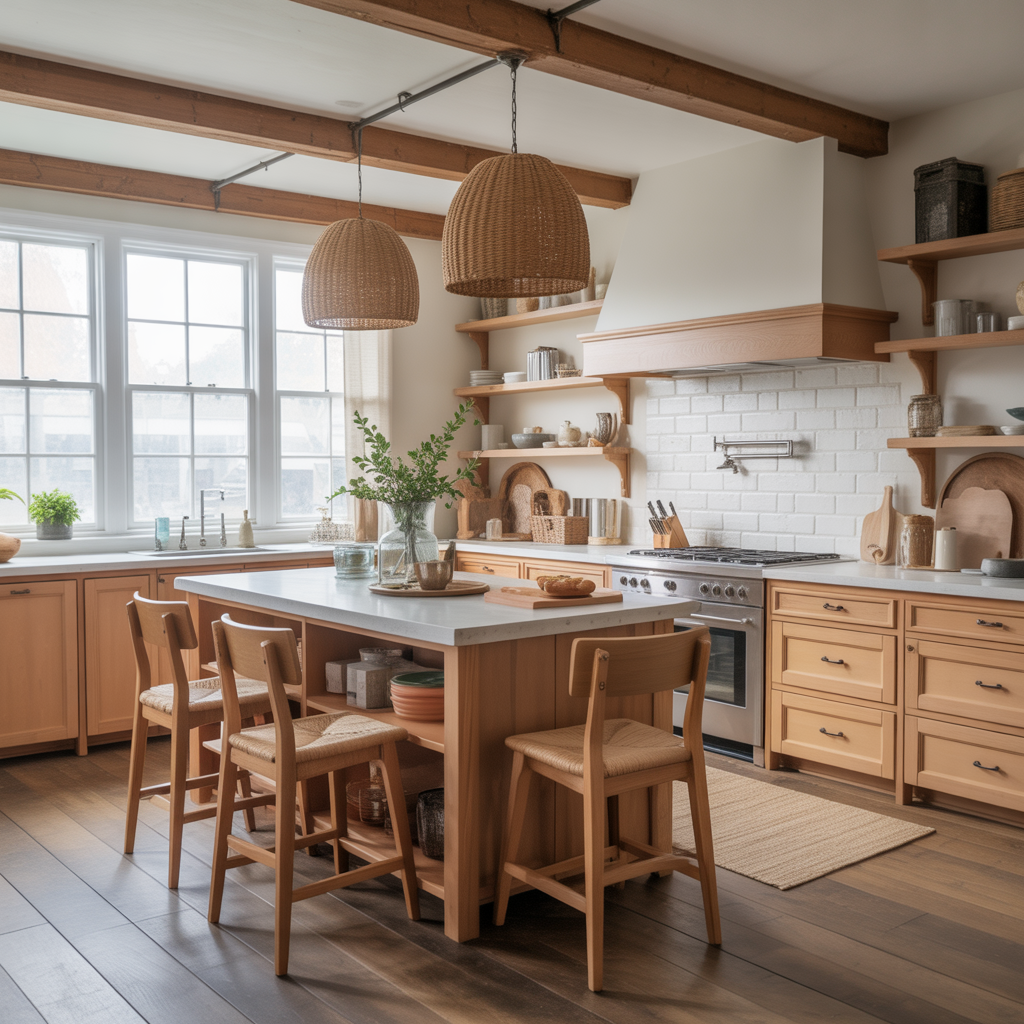
Black Japandi Kitchen: 25 Ideas for a Sophisticated Minimalist Space
Japandi design continues to captivate homeowners and designers worldwide, blending the clean, functional lines of Scandinavian style with the timeless wabi-sabi principles of Japanese interiors. A black Japandi kitchen takes this fusion a step further, creating a bold yet serene environment where modern elegance meets calming simplicity.
This blog explores 25 detailed ideas to inspire your dream kitchen, weaving in practical approaches and styling cues that highlight the beauty of a darker palette while retaining warmth and balance. From cabinetry choices to lighting, textures, and accessories, you’ll discover how to craft a kitchen that is both functional and aesthetically compelling.
Minimalist Black Cabinetry
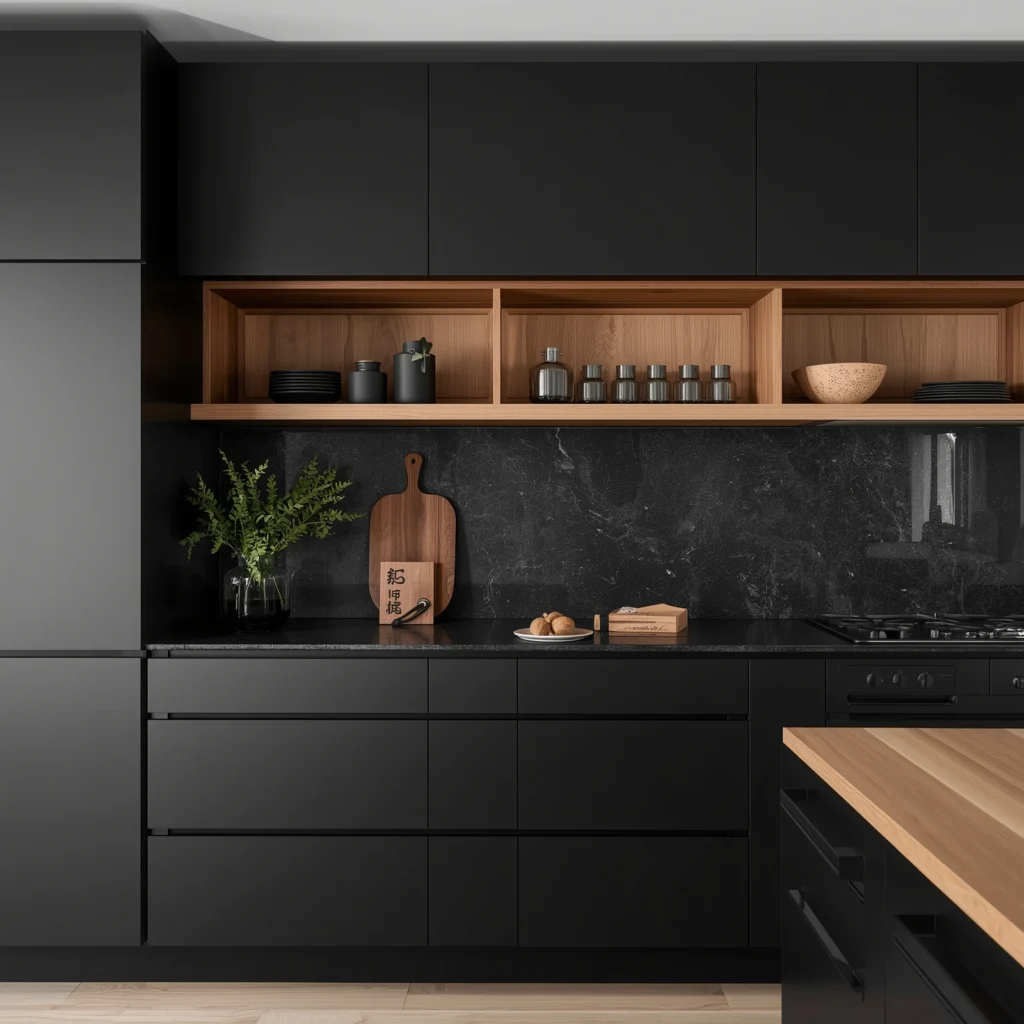
The foundation of a black Japandi kitchen often begins with cabinetry. Flat-panel cabinets in matte black, free of ornate handles, embrace the minimalist spirit. Opt for soft-close features and recessed pulls to keep the design sleek.
Pair the cabinets with wooden open shelving to introduce contrast and warmth. Natural oak, ash, or walnut harmonizes beautifully with black, reflecting Japandi’s balance between boldness and organic calm.
Stone Countertops with Natural Texture
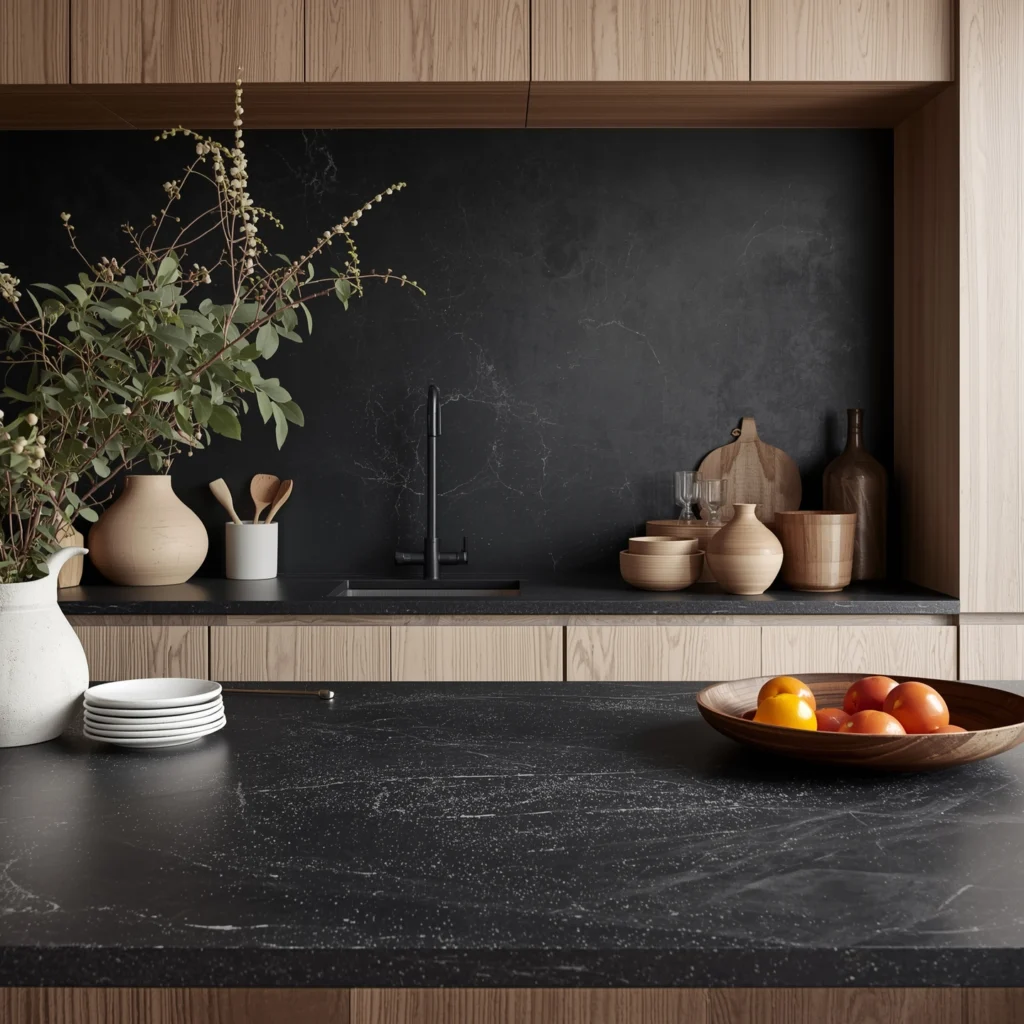
Countertops are a focal point in Japandi kitchens. Honed black granite, soapstone, or dark quartz provide durability while maintaining understated luxury. A matte finish keeps the design grounded, preventing unwanted glare.
For added texture, choose stone with subtle veining. This creates visual depth and complements the simplicity of the cabinetry without overwhelming the minimalist look.
Wooden Accents for Balance
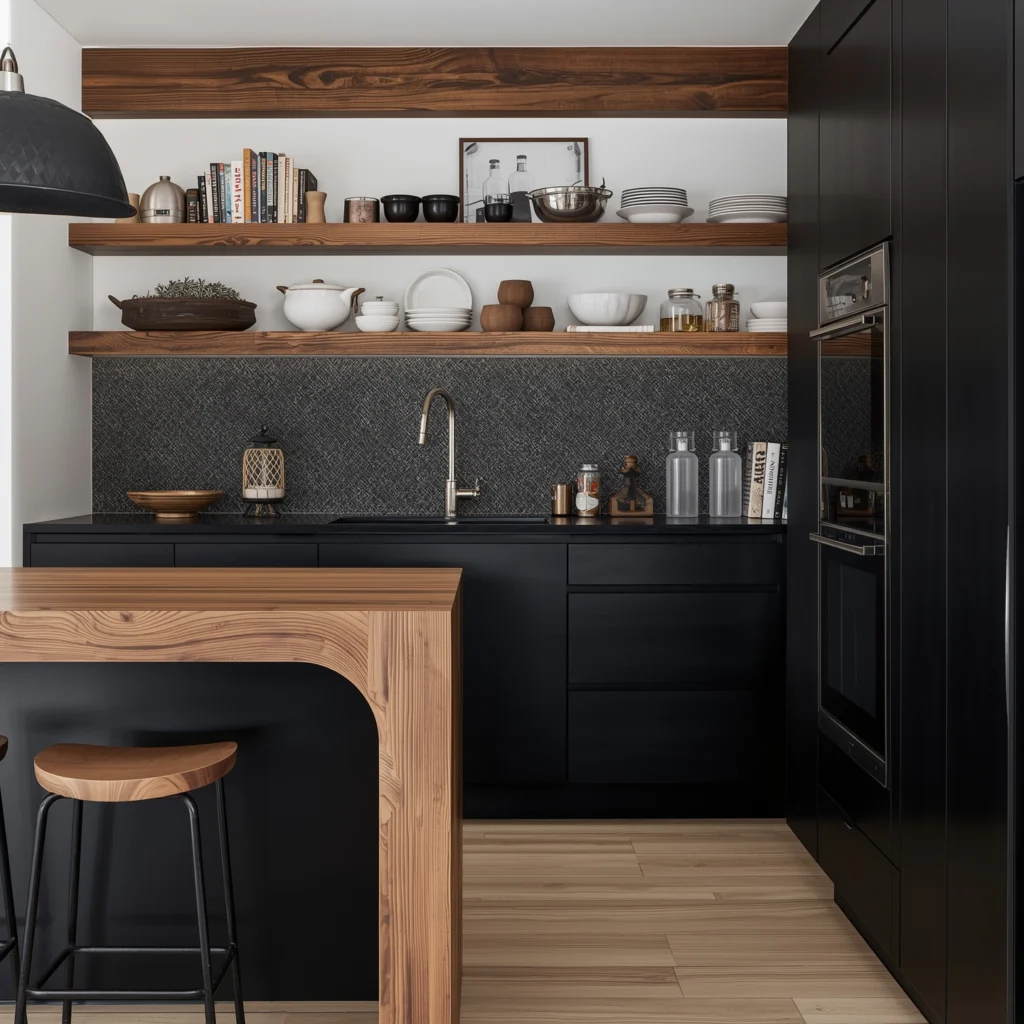
Wood is central to Japandi design. In a black Japandi kitchen, the dark cabinetry can sometimes feel heavy—wooden accents break up this weight. Incorporate wood in shelving, bar stools, or even a butcher block island top.
Choose finishes that lean toward natural tones rather than high gloss. The raw, tactile quality of wood aligns with wabi-sabi’s appreciation of imperfection and authenticity.
Open Shelving with Functional Styling
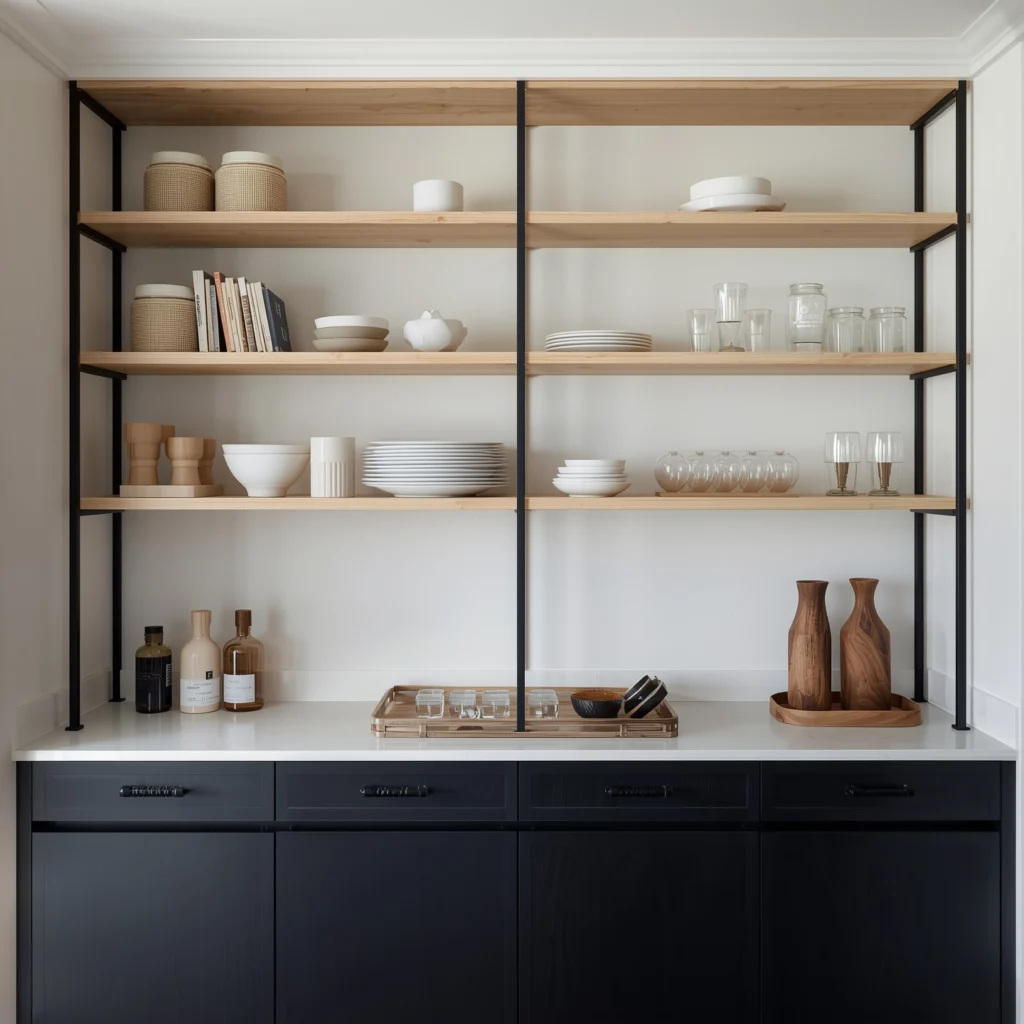
Instead of traditional upper cabinets, consider open shelving in natural wood or blackened steel. This creates an airy atmosphere while offering practical storage. Style shelves with ceramics, bamboo trays, or glassware to highlight craftsmanship and simplicity.
The key is moderation. Keep items minimal and intentional—this prevents clutter and reinforces the calming atmosphere Japandi is known for.
Layered Lighting for Warmth
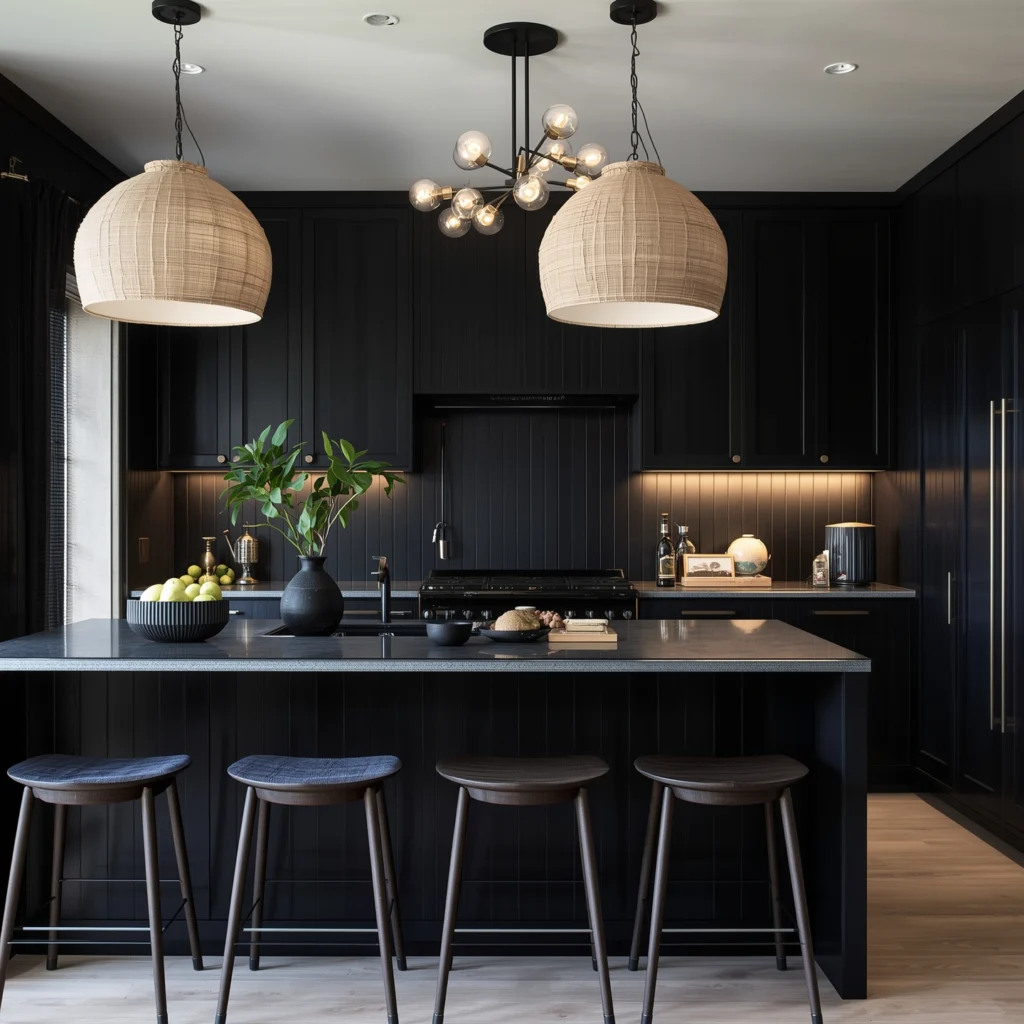
Lighting in a black Japandi kitchen should feel soft and layered. Pendant lights with organic shapes—such as linen shades, woven rattan, or black ceramic finishes—add both function and style.
Combine pendant lighting with recessed LEDs and under-cabinet strips. Warm white tones (around 2700K–3000K) keep the space inviting, counterbalancing the coolness of black surfaces.
Matte Black Fixtures and Hardware
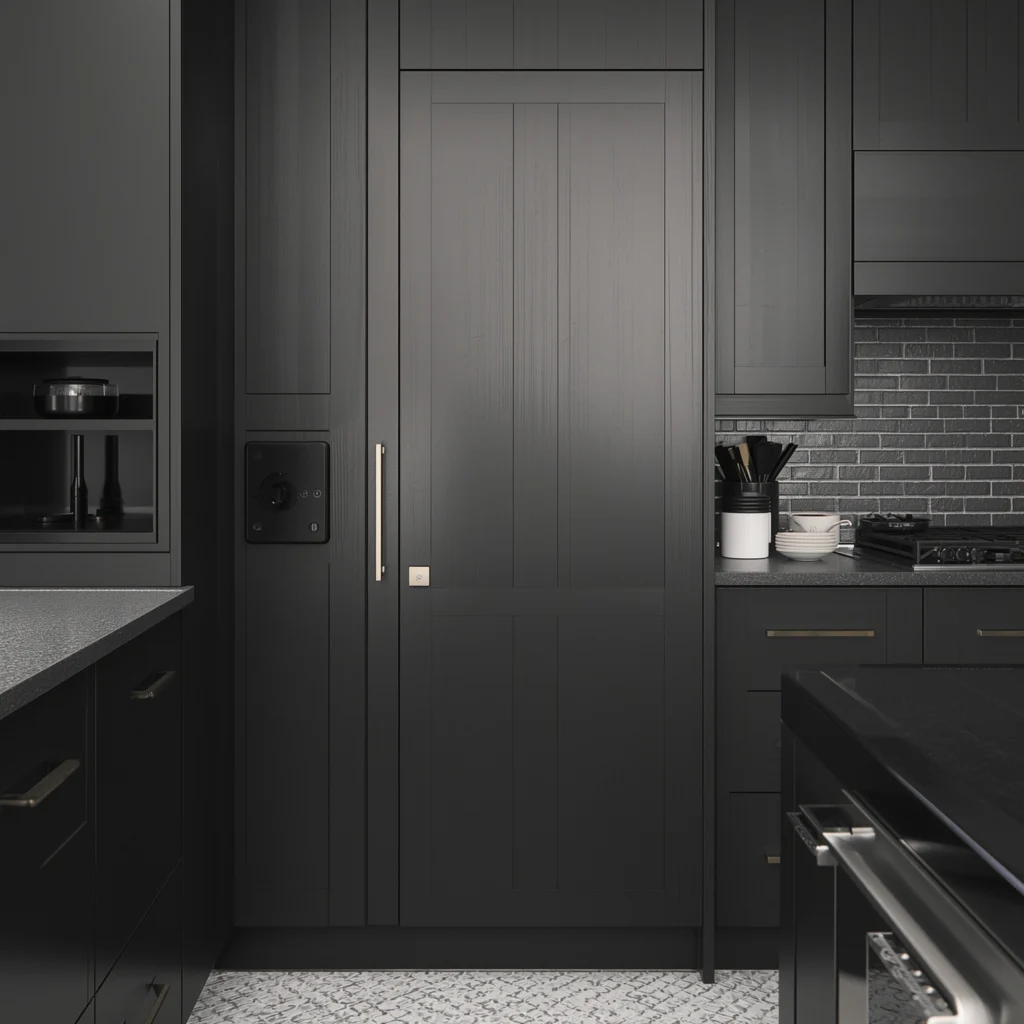
Consistency in details elevates the entire kitchen. Matte black faucets, drawer pulls, and handles seamlessly blend with cabinetry. The monochromatic finish ensures cohesion while maintaining the minimalist essence.
For contrast, consider pairing black fixtures with brushed brass or stainless steel elements in lighting or decor for a subtle layered effect.
Integrated Appliances for Clean Lines
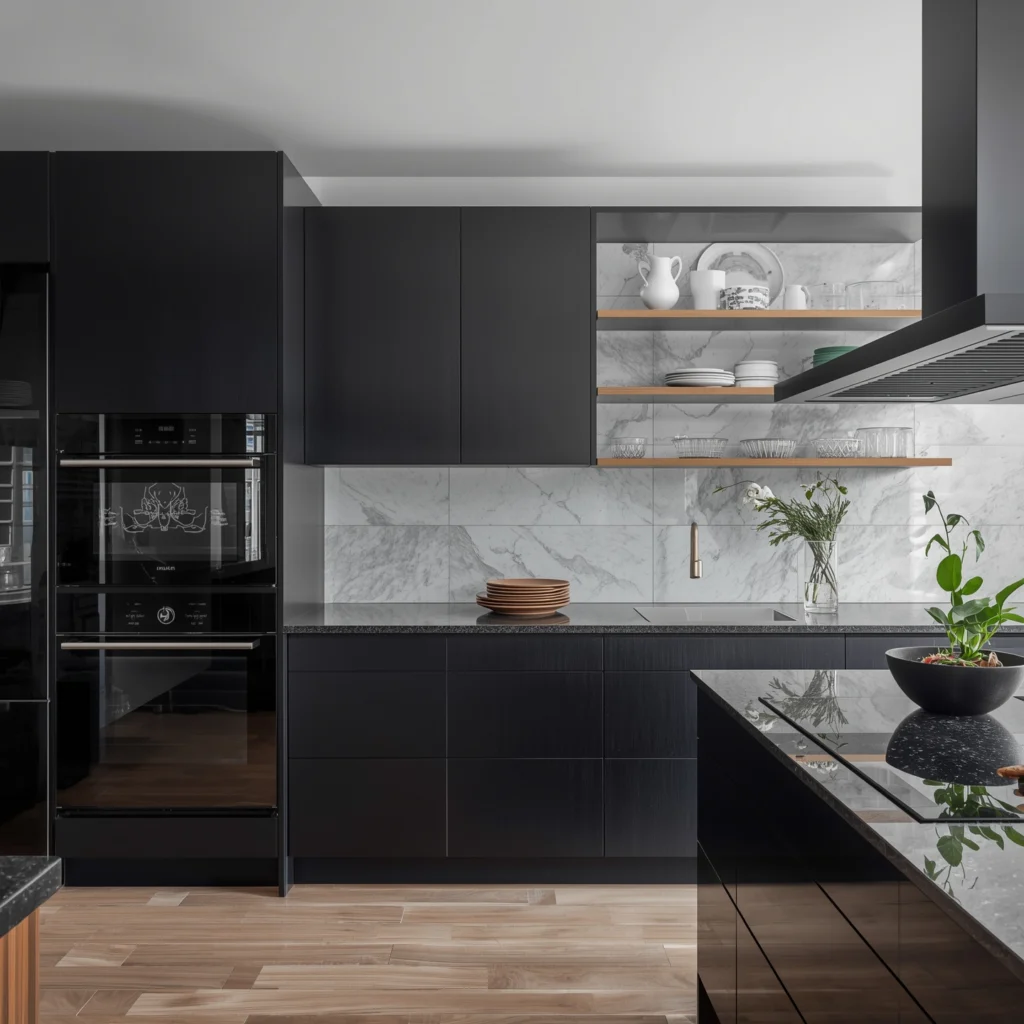
Japandi design thrives on uninterrupted flow. Opt for integrated appliances—fridges, dishwashers, and ovens concealed within cabinetry.
In a black Japandi kitchen, this approach maintains the seamless visual plane, keeping the design uncluttered. Even range hoods can be concealed behind custom cabinetry for a refined look.
Black and Natural Stone Backsplash
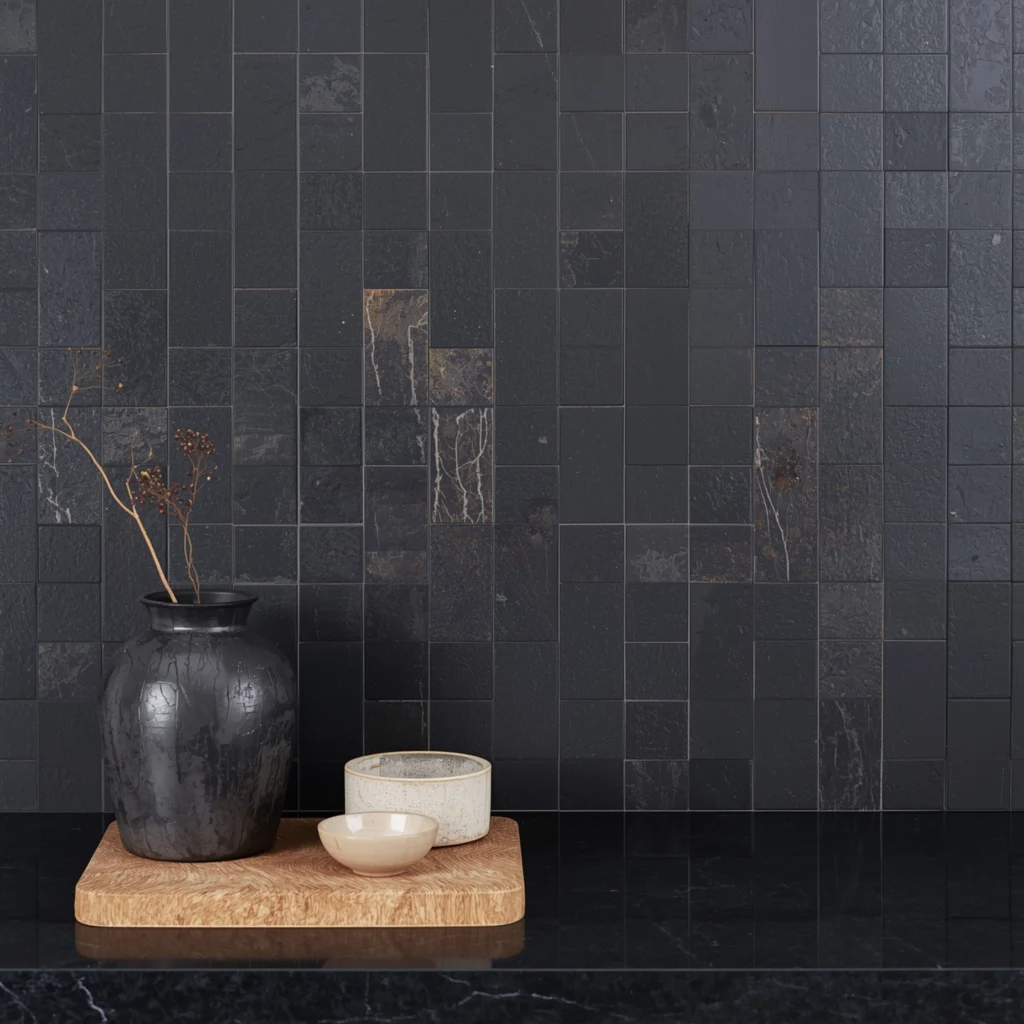
Backsplashes can become a highlight feature. A matte black tile backsplash or natural stone slab continues the dark palette with a touch of artistry.
For texture, try handmade zellige tiles in a dark tone. Their slight imperfections nod to Japanese wabi-sabi, celebrating uniqueness in design.
Minimalist Kitchen Island Design
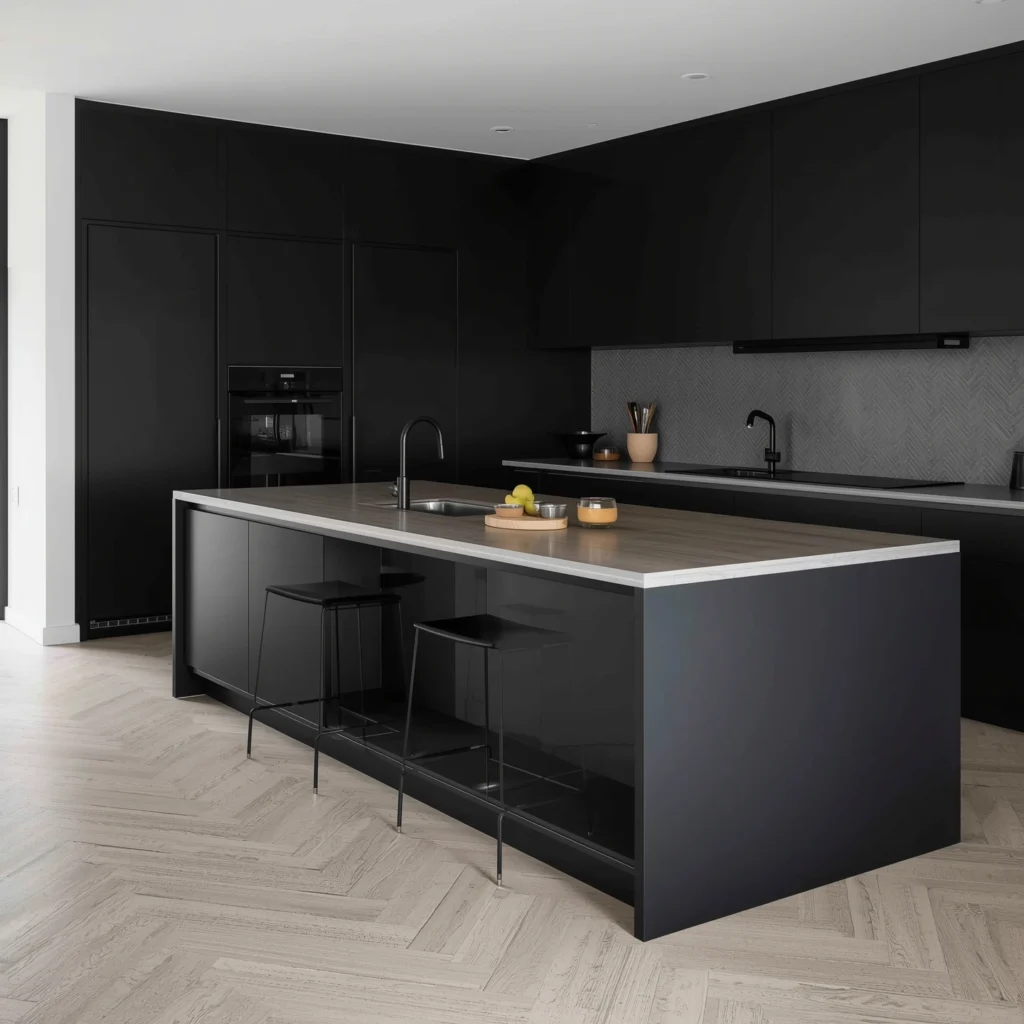
A central island anchors the kitchen. In a black Japandi kitchen, a minimalist island in matte black with a wooden or stone countertop creates a strong statement.
Add subtle storage solutions within the island while keeping visible design elements pared back. A waterfall countertop can enhance the sculptural feel.
Natural Textiles and Soft Elements
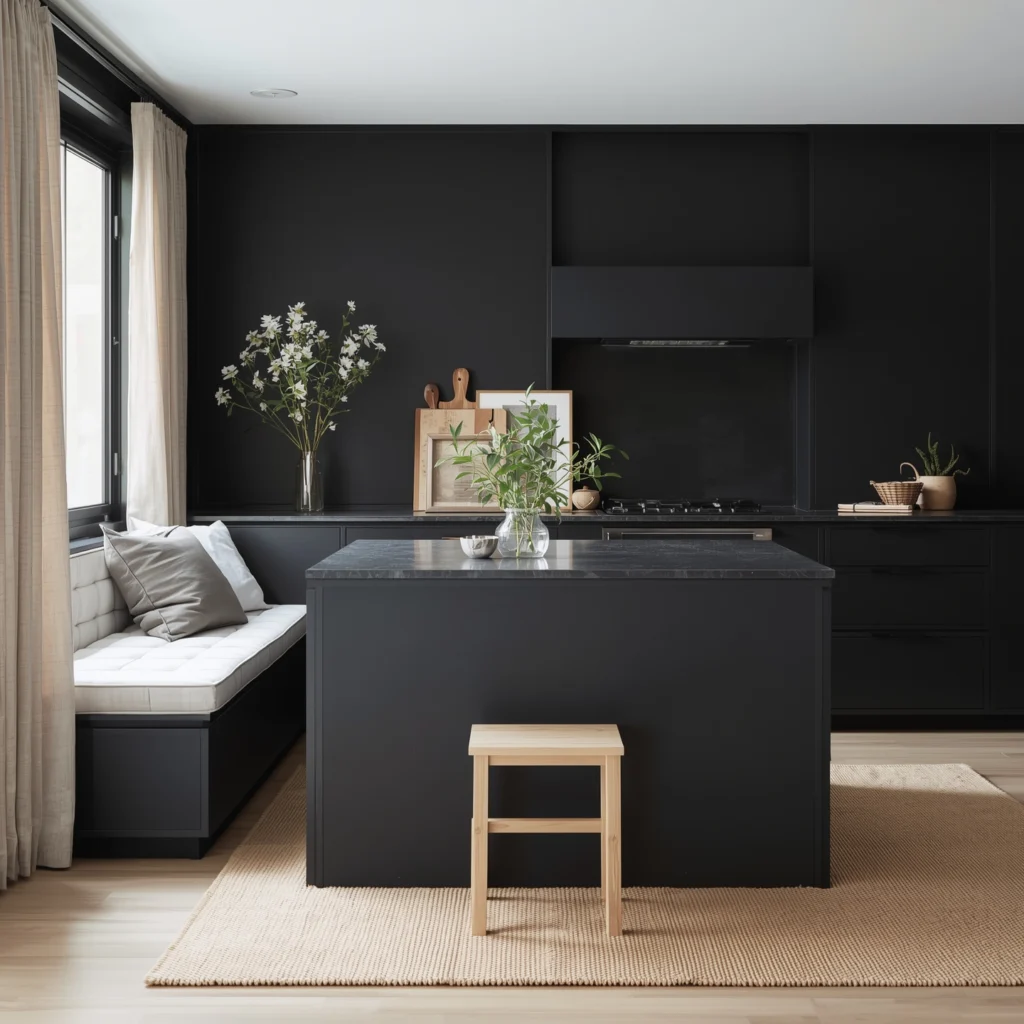
Textiles soften the sharpness of dark surfaces. Linen seat cushions, cotton curtains, and jute rugs bring texture while aligning with Japandi’s preference for natural fibers.
Choose neutral shades like beige, cream, or muted gray to complement black surfaces and introduce warmth.
Indoor Greenery for Balance
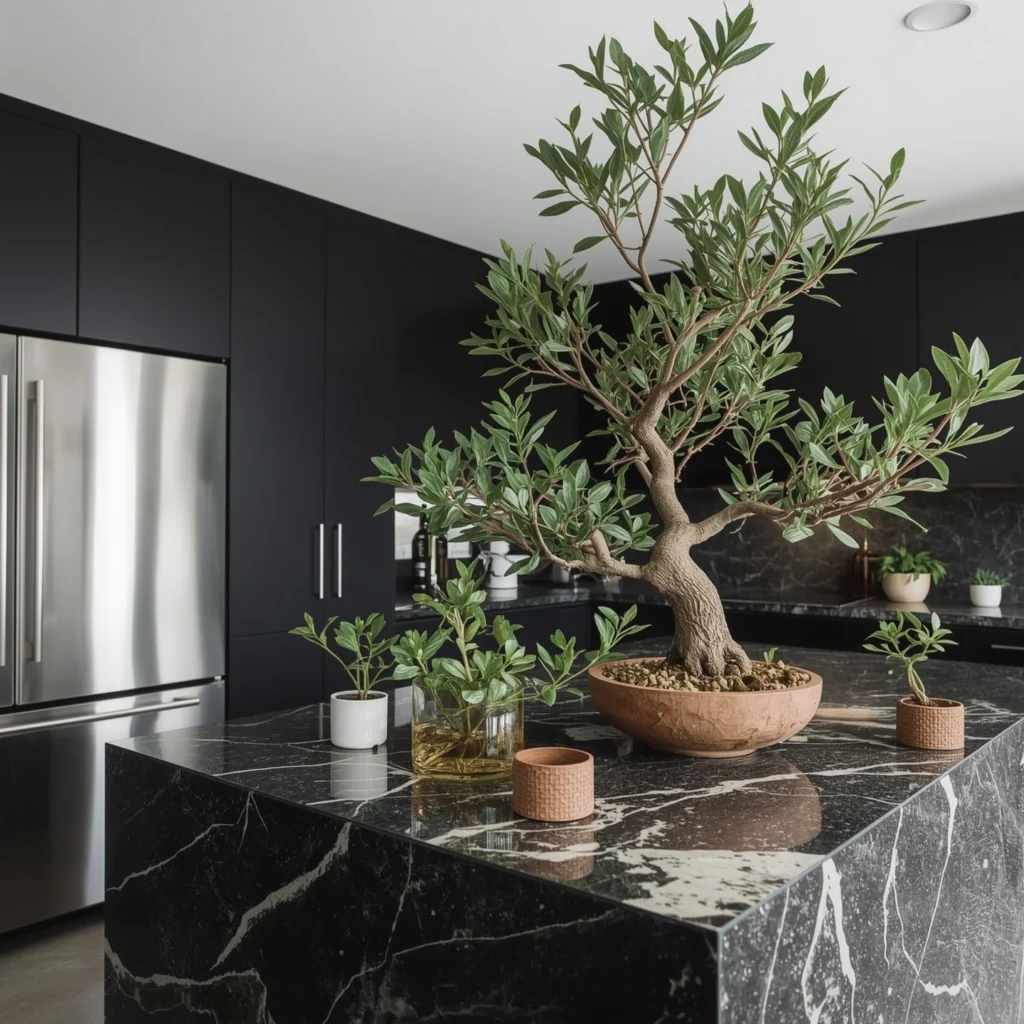
Plants play a vital role in a Japandi space. Introduce bonsai, olive trees, or small potted herbs to bring life into the kitchen.
In a black Japandi kitchen, greenery offers a refreshing contrast to darker tones, enhancing the calming environment and grounding the space in nature.
Sliding Doors and Minimal Partitions
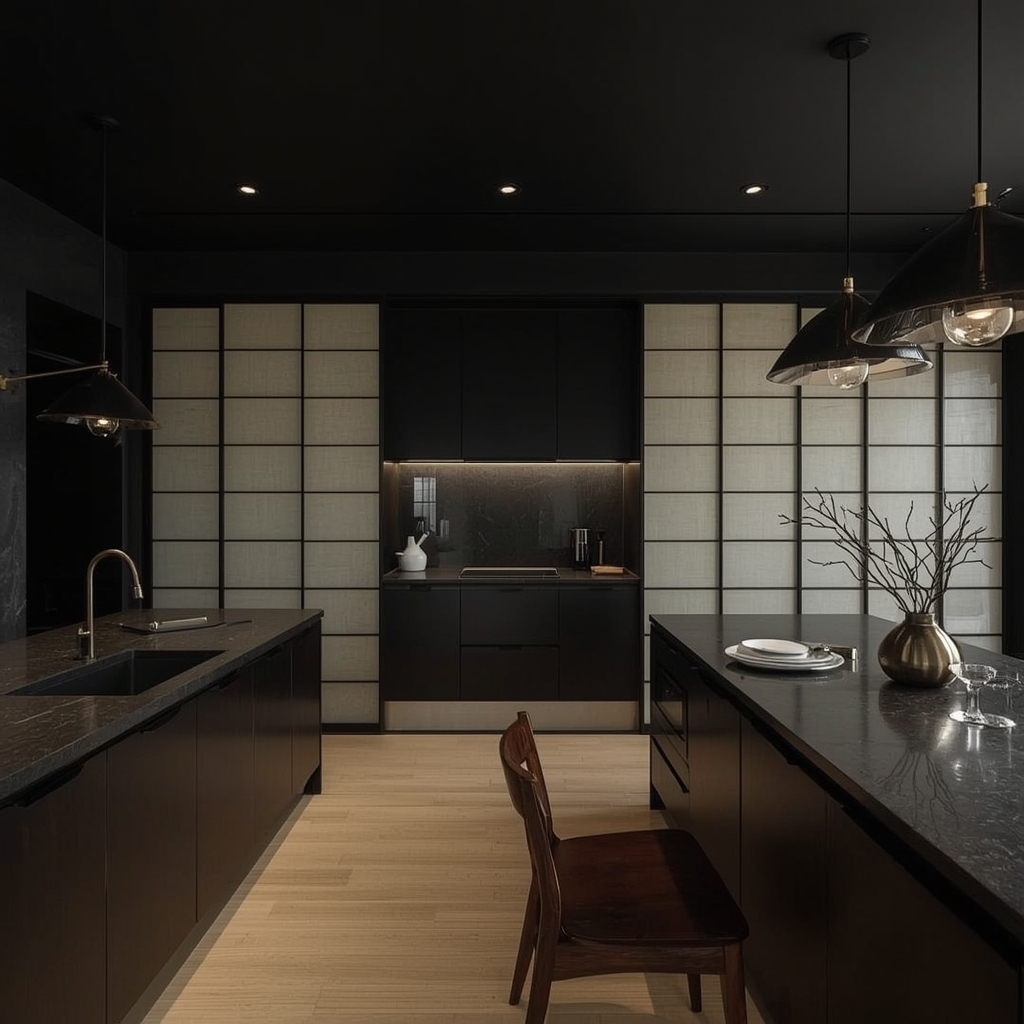
Inspired by Japanese shoji screens, sliding doors or partitions can define kitchen zones without making the space feel closed off.
Opt for black frames with frosted glass or wood panels. This adds architectural interest while maintaining the fluidity and openness that Japandi design encourages.
Layered Black and Neutral Color Palette
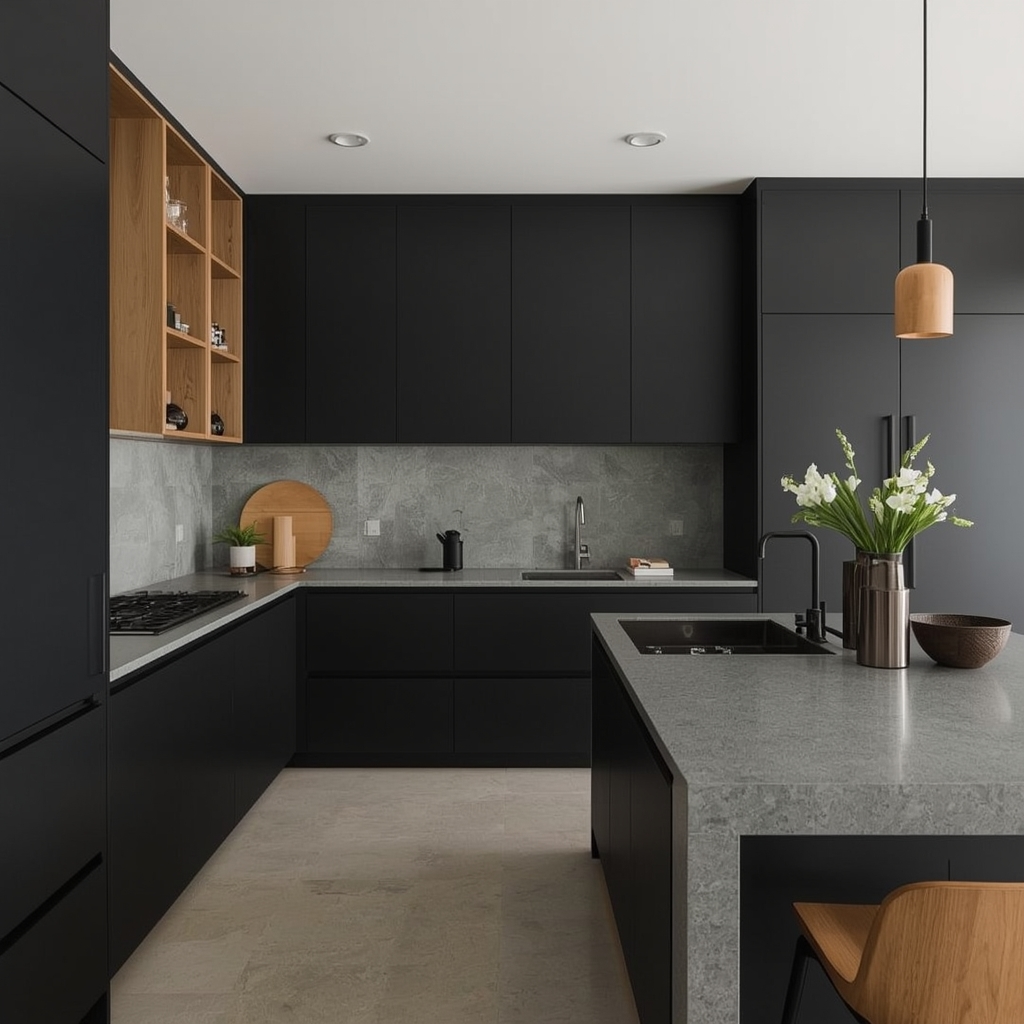
A black kitchen doesn’t have to feel stark. Layer different tones: deep charcoal cabinetry, lighter gray stone, and neutral wood accents.
This tonal variation creates depth while adhering to Japandi’s neutral-based palette. Avoid overly glossy finishes to maintain harmony and subtlety.
Functional Storage Solutions
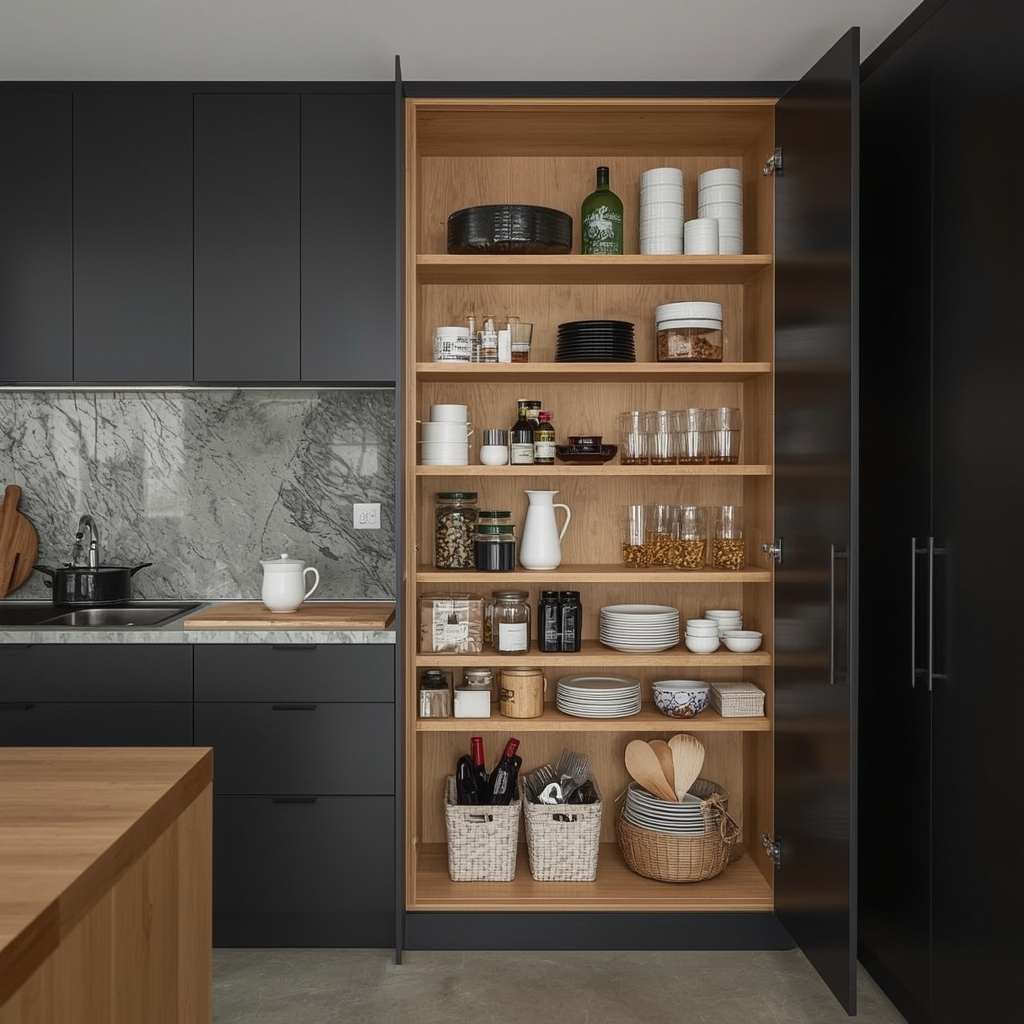
Storage must be intentional. Incorporate hidden drawers, pull-out organizers, and concealed shelving. Japandi kitchens value a clutter-free aesthetic, and functionality ensures that simplicity is preserved in daily use.
A black Japandi kitchen with well-planned storage keeps countertops clear, supporting both style and efficiency.
Handcrafted Accessories and Decor
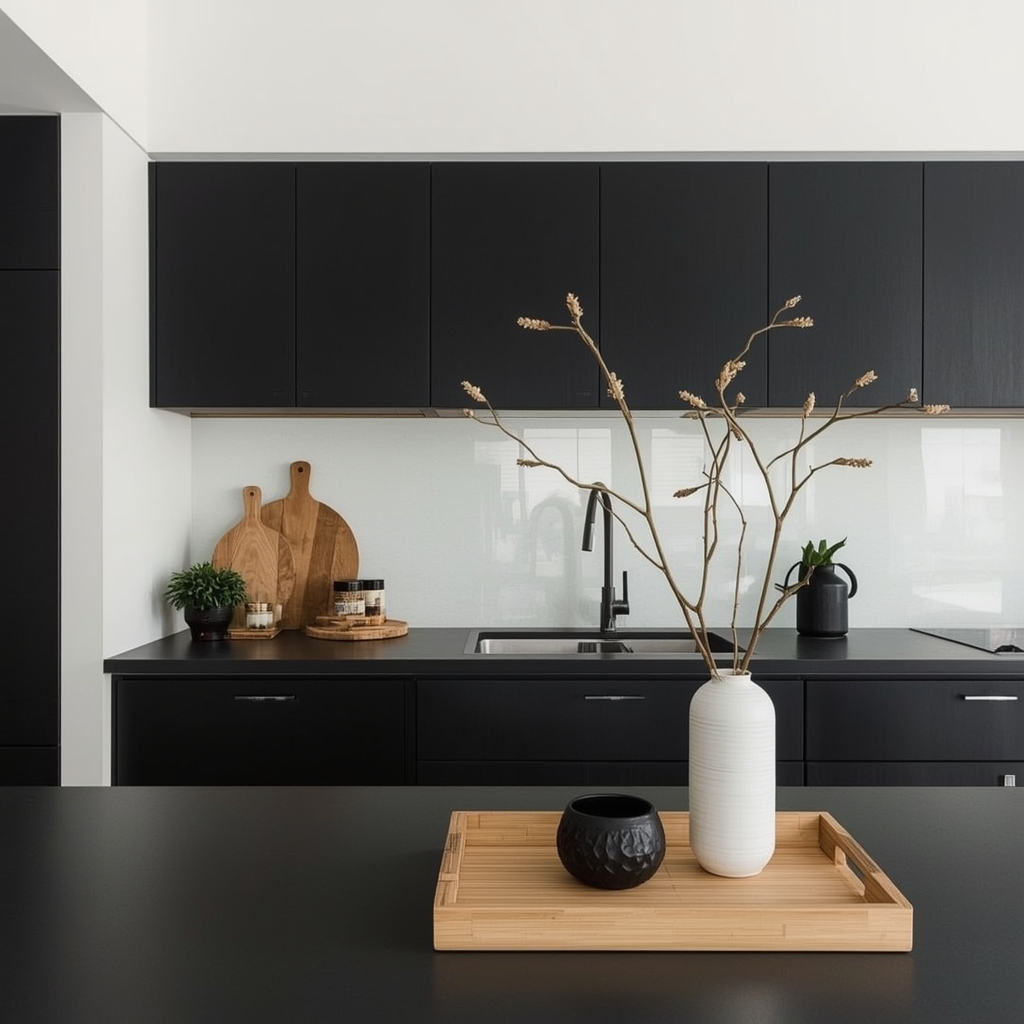
Final touches matter. Handmade ceramics, minimal vases, and bamboo trays add personality while staying aligned with Japandi principles.
Keep accessories limited but meaningful, allowing craftsmanship to stand out against the minimalist black backdrop.
Mixed Metal Accents for Subtle Contrast
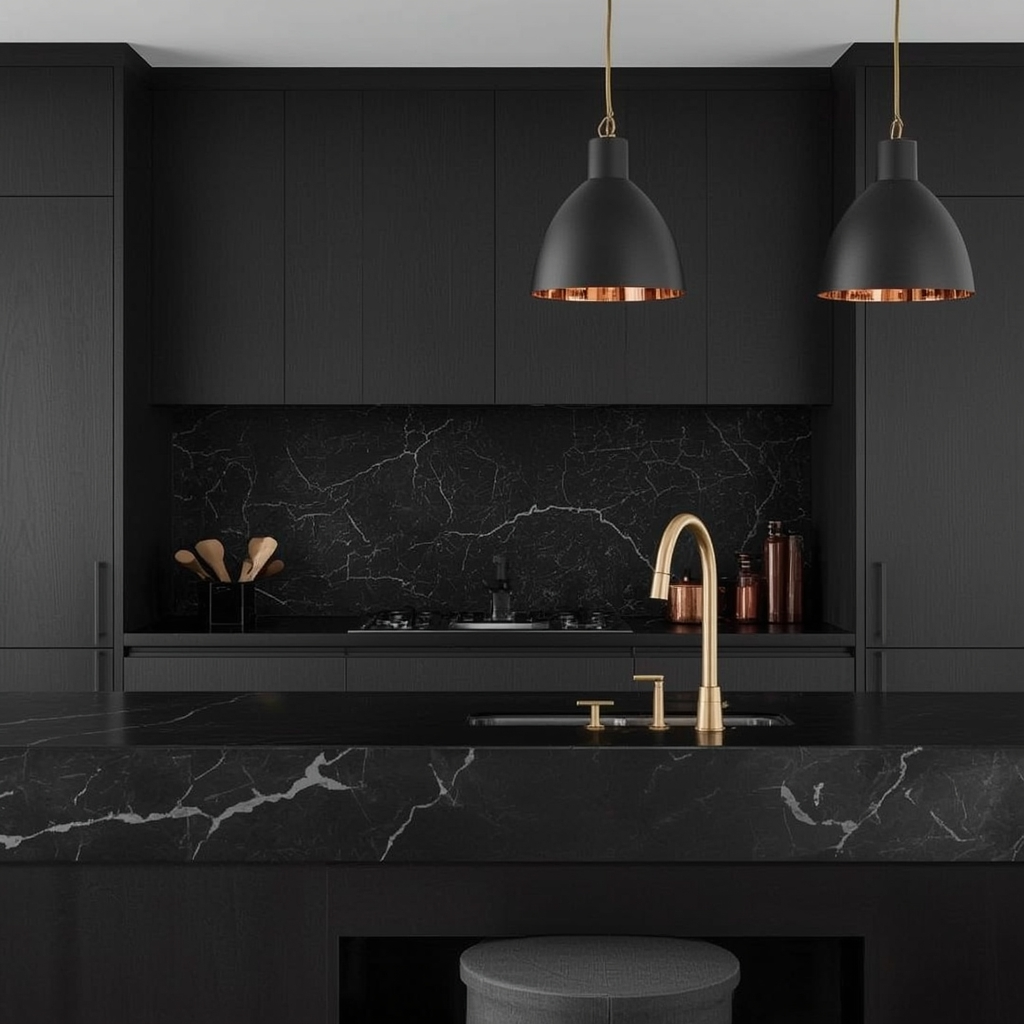
Incorporating subtle metallic details keeps the design layered and refined. In a black Japandi kitchen, matte black fixtures pair beautifully with brushed brass or muted copper accents. For example, a black faucet with brass handles or pendant lights with inner gold tones softens the darkness and adds elegance without breaking Japandi’s minimalist spirit.
Hidden Pantry Solutions
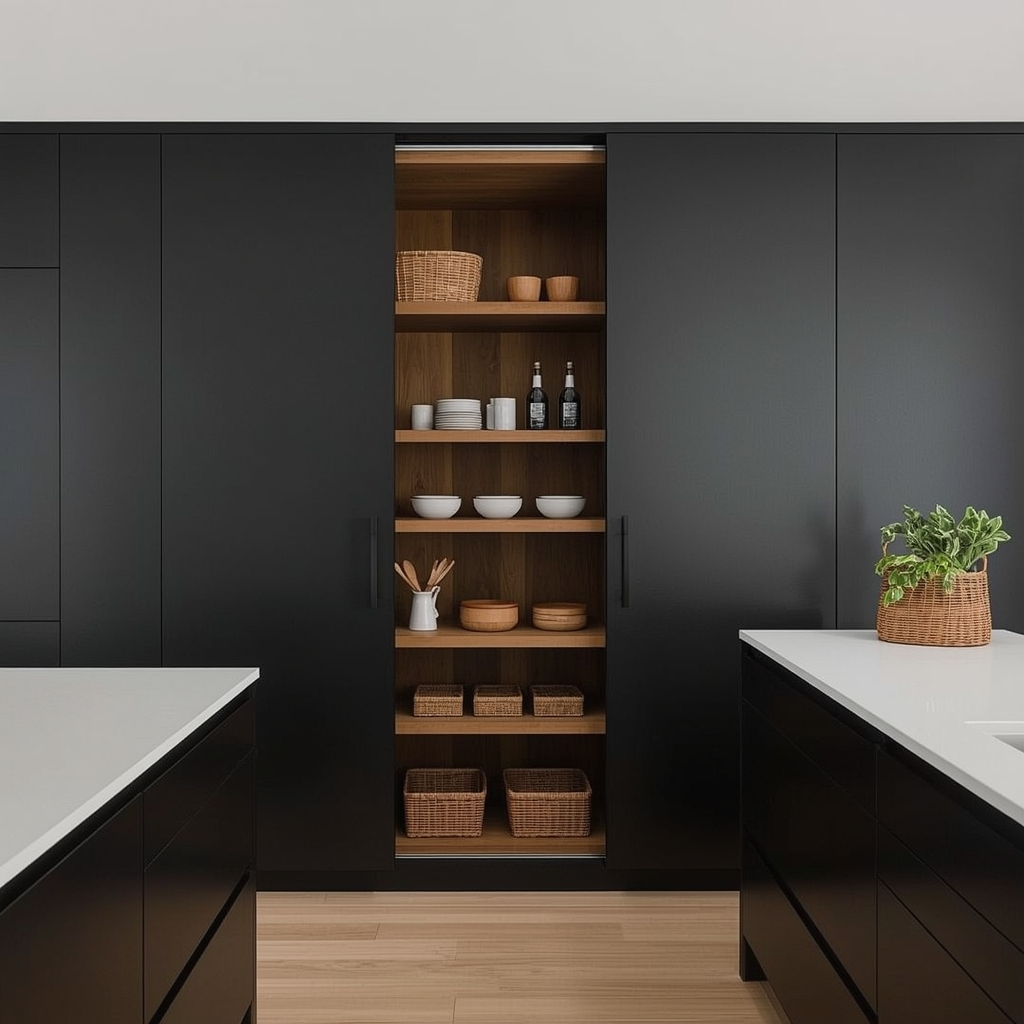
Concealing pantry spaces behind sleek sliding doors or integrated cabinetry maintains Japandi’s love for clean lines. A hidden pantry painted in matte black blends into the overall aesthetic. Add wooden shelves and wicker baskets inside to keep storage natural and organized.
Black-Stained Wood Cabinetry
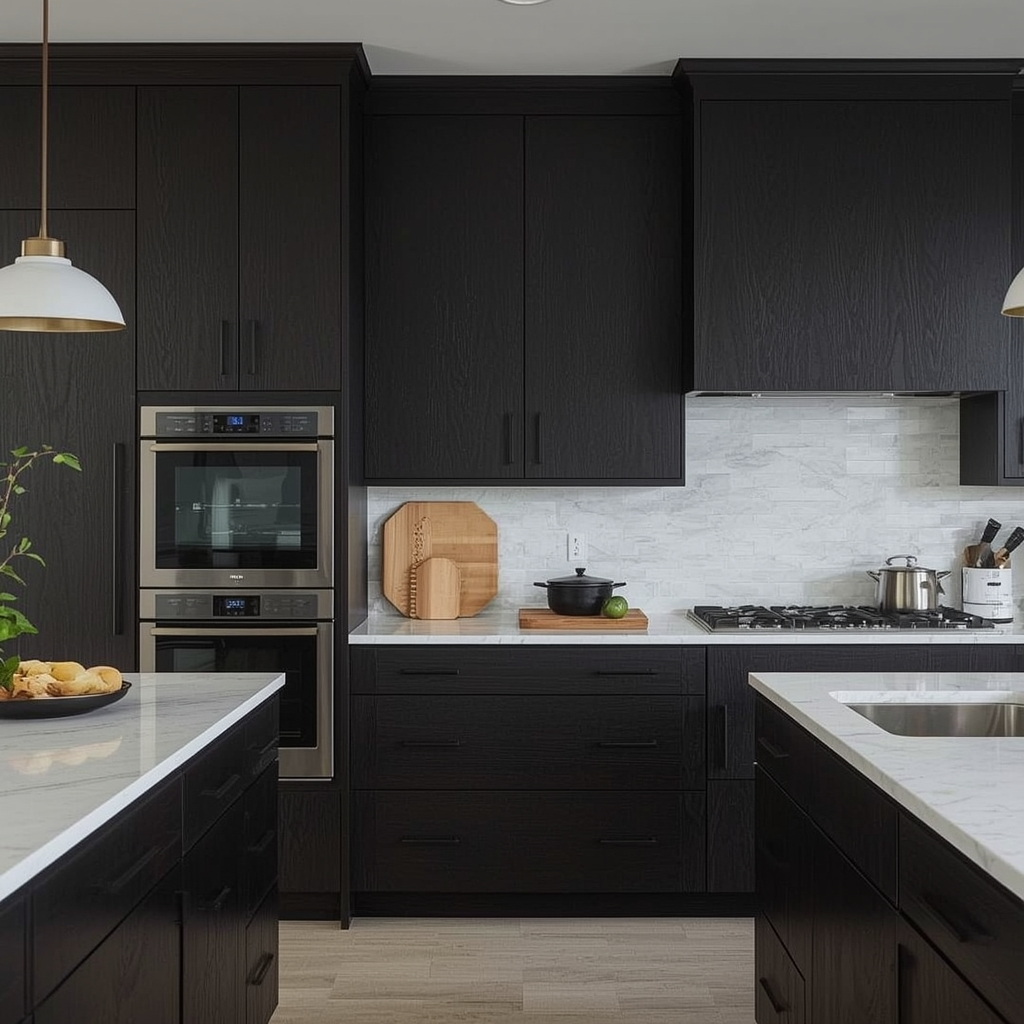
Instead of pure matte black cabinets, black-stained wood offers warmth with visible grain patterns. This approach highlights natural textures, a key element in Japandi design, while delivering the bold presence of dark tones. The result is a kitchen that feels organic, not sterile.
Tatami-Inspired Seating Area
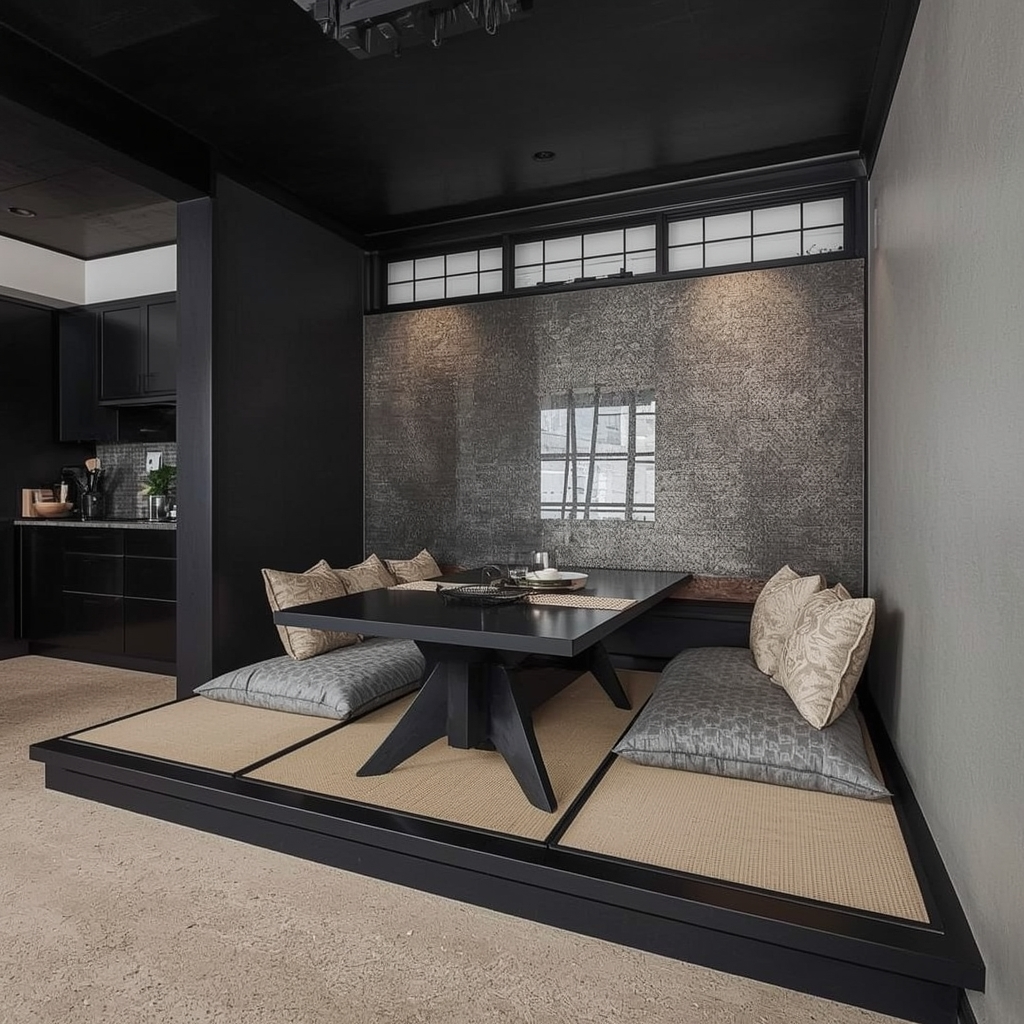
Bring Japanese tradition into the kitchen by creating a low, tatami-inspired seating nook near the dining zone. Pair a black wood dining table with neutral cushions on a raised platform. This approach makes the black Japandi kitchen both cultural and cozy, enhancing social moments.
Minimalist Vent Hood Design
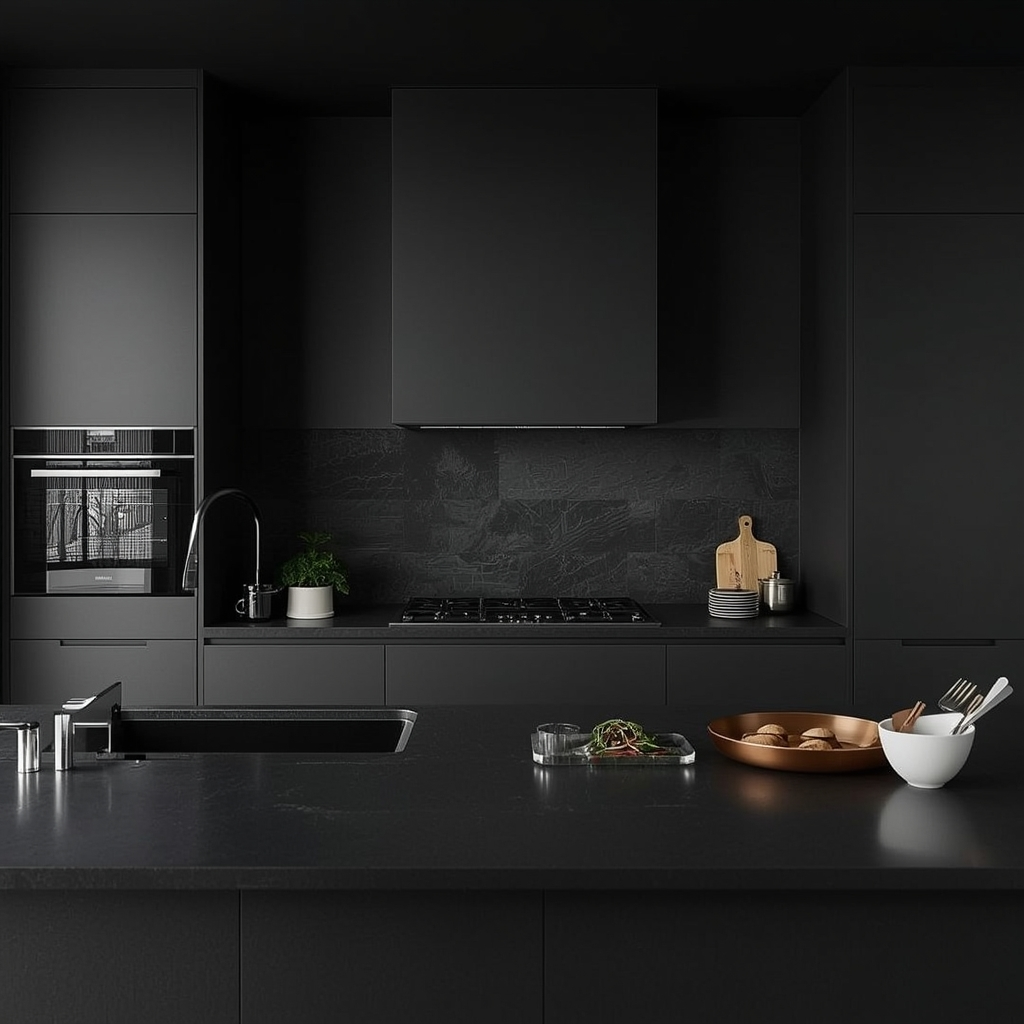
Range hoods can dominate a kitchen visually. In Japandi style, they’re best kept subtle. Opt for custom black plaster, concealed cabinetry hoods, or slimline matte black metal models. This ensures functionality without disrupting the calm visual flow of the kitchen.
Ceramic Tile Flooring with Earthy Tones
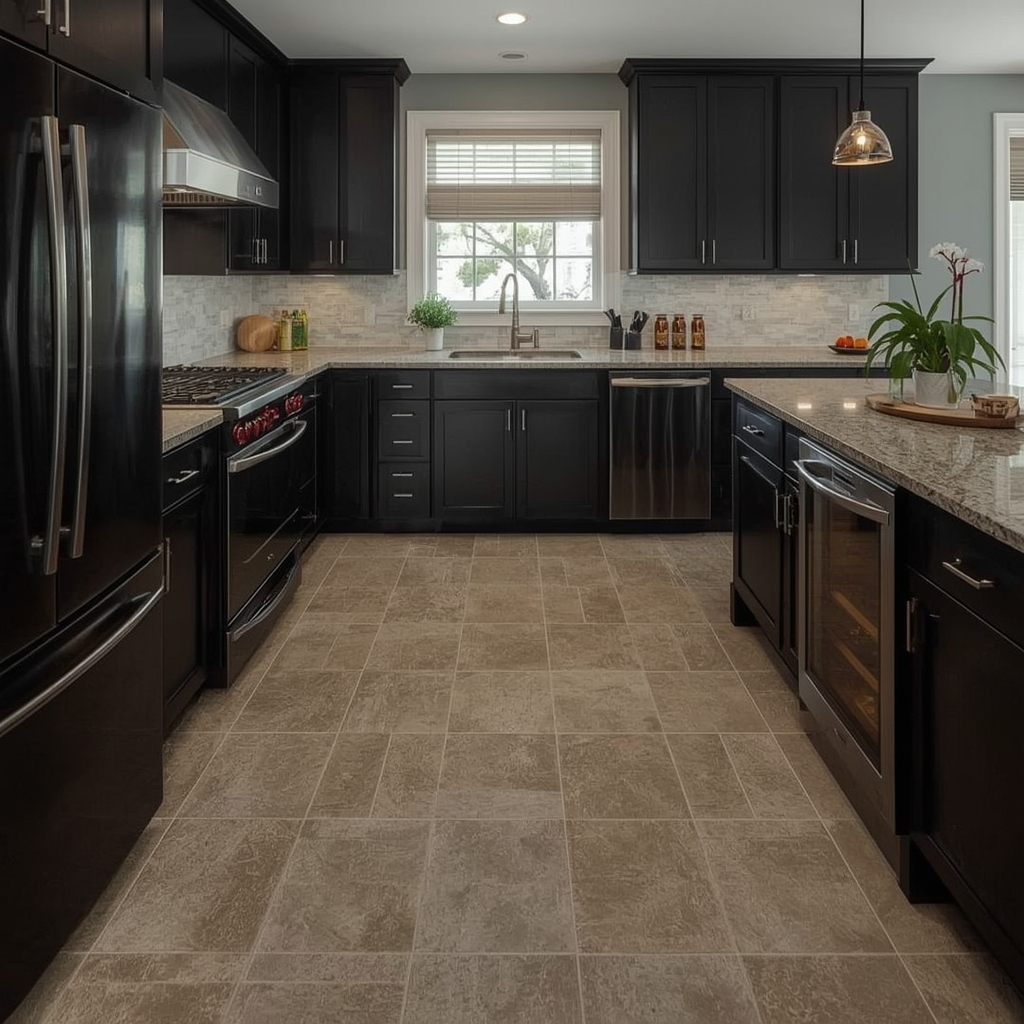
While wood is common, ceramic or stone tiles in earthy shades such as clay, beige, or muted gray pair beautifully with black cabinetry. The texture of handmade or matte tiles aligns with Japandi’s appreciation of artisanal imperfection. Tiles are also practical for high-use kitchen areas.
Black-Framed Glass Cabinets
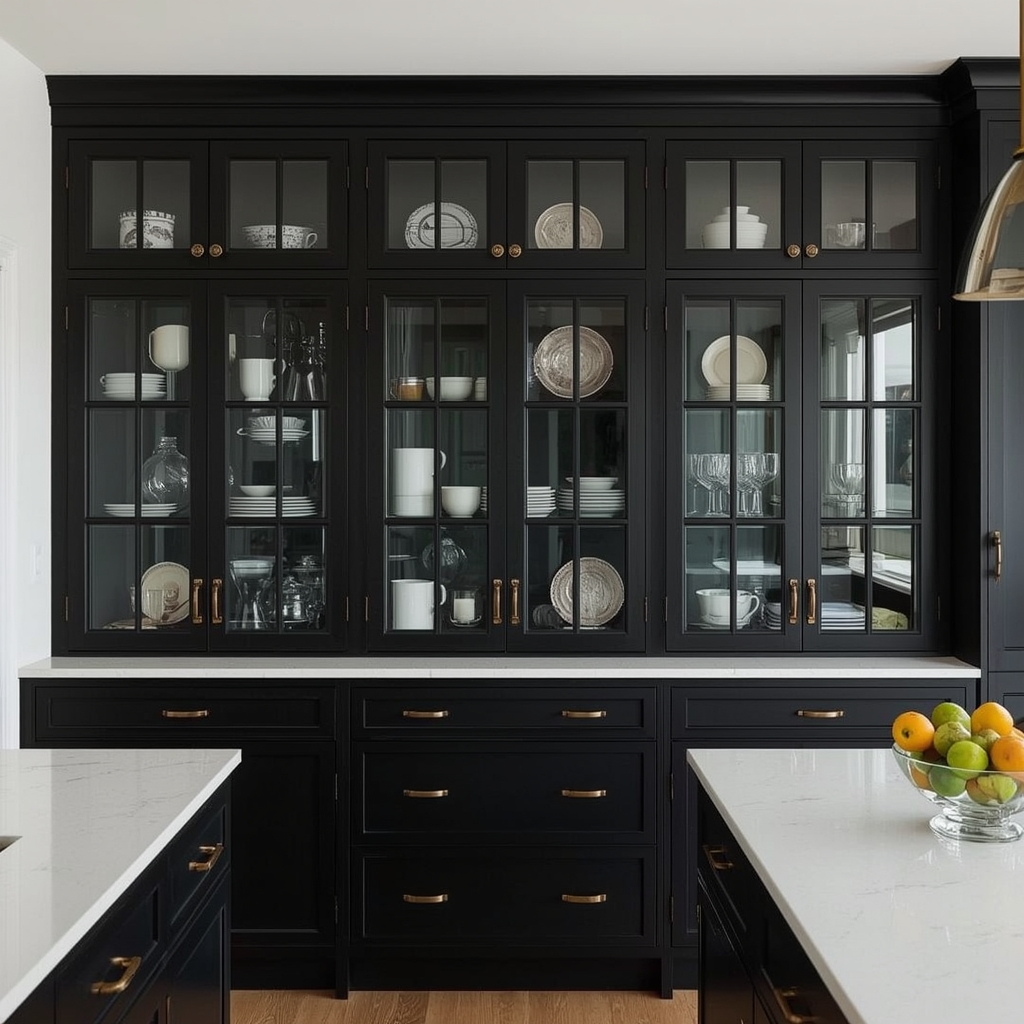
Introduce lightness without sacrificing the bold color palette by using black-framed glass cabinets. They display curated items like ceramics or glassware while maintaining clean lines. Frosted or ribbed glass can soften the look, offering privacy for stored items.
Minimal Art and Calligraphy Decor
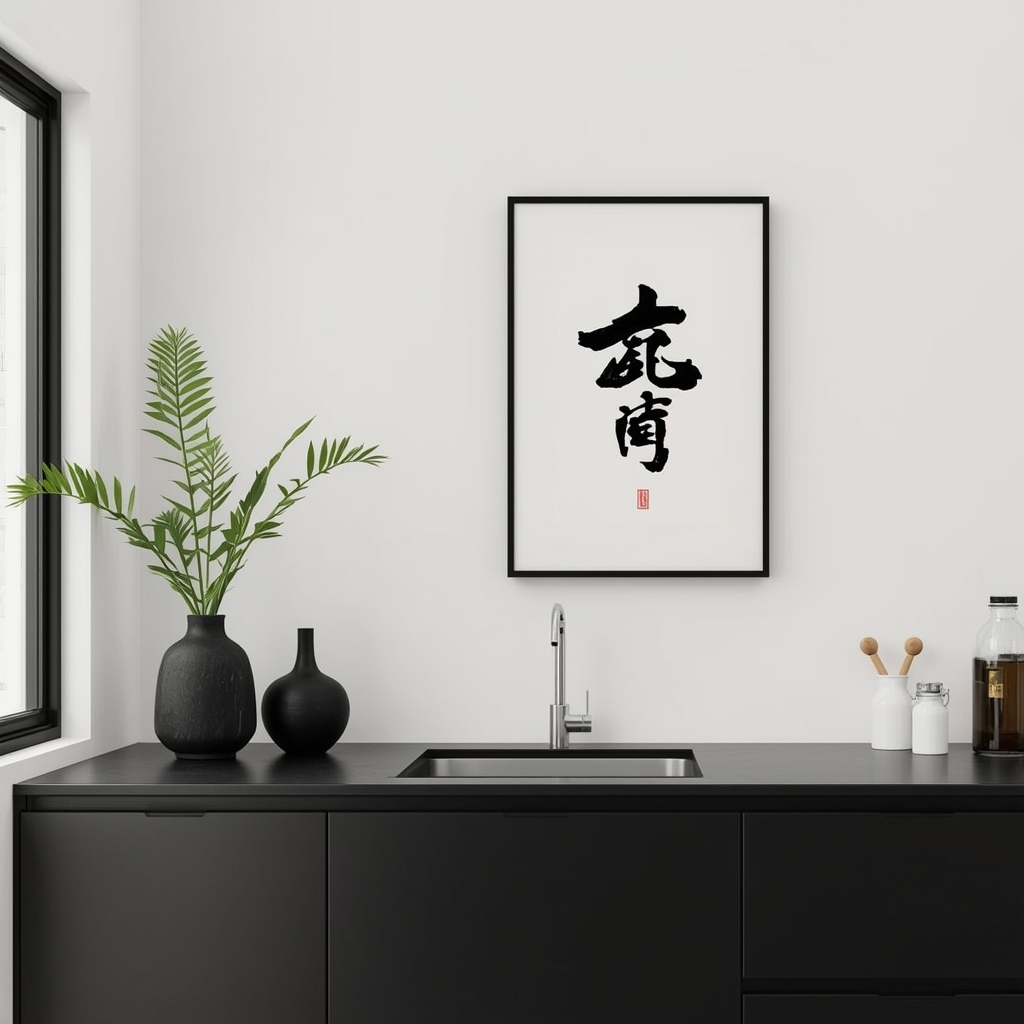
Keep wall decor simple but intentional. A single piece of Japanese calligraphy or abstract Scandinavian-style artwork framed in black adds personality without clutter. The restrained use of art reinforces Japandi’s focus on serenity.
Layered Ceiling Treatments
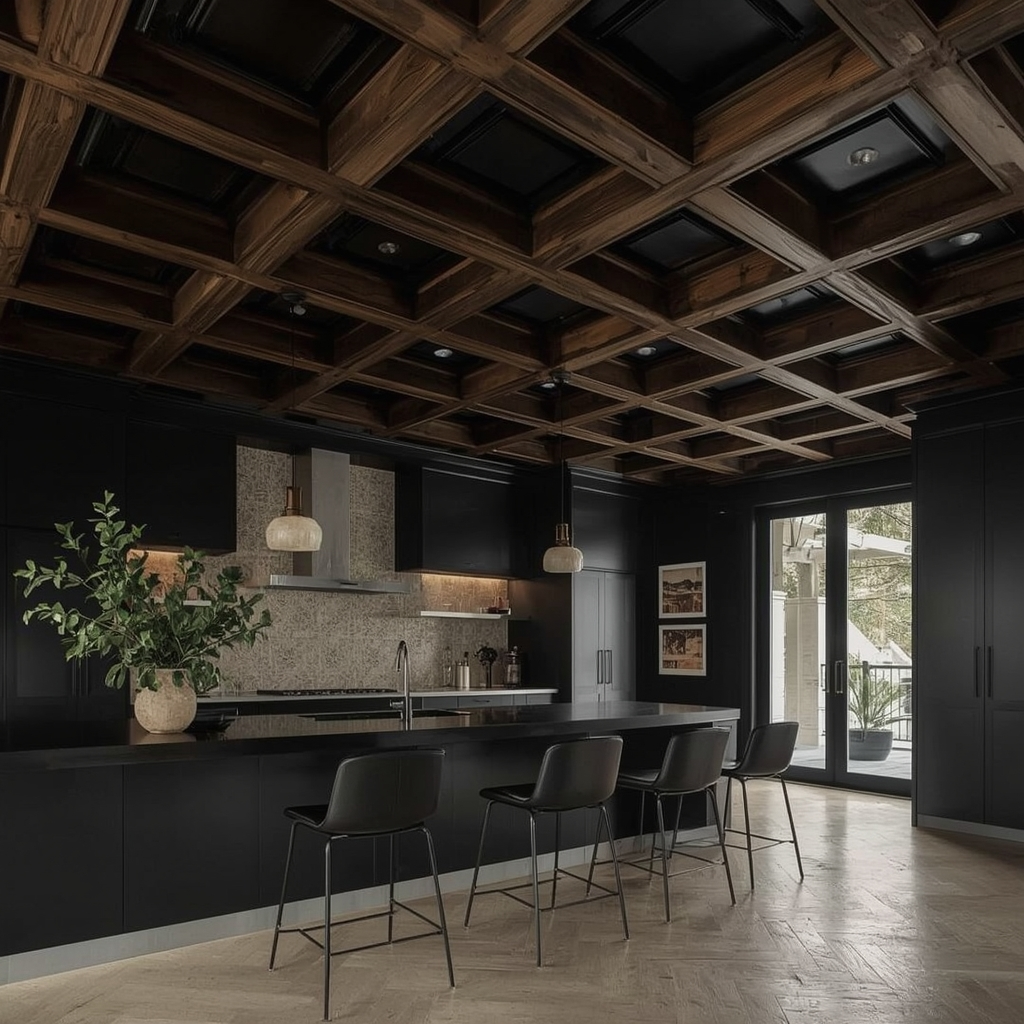
A ceiling often goes unnoticed, but in a black Japandi kitchen, it can add depth. Consider wooden ceiling beams stained dark, or matte black coffered ceiling panels softened by concealed lighting. This overhead detail grounds the room while keeping the design cohesive.
Functional Island Seating with Sculptural Stools
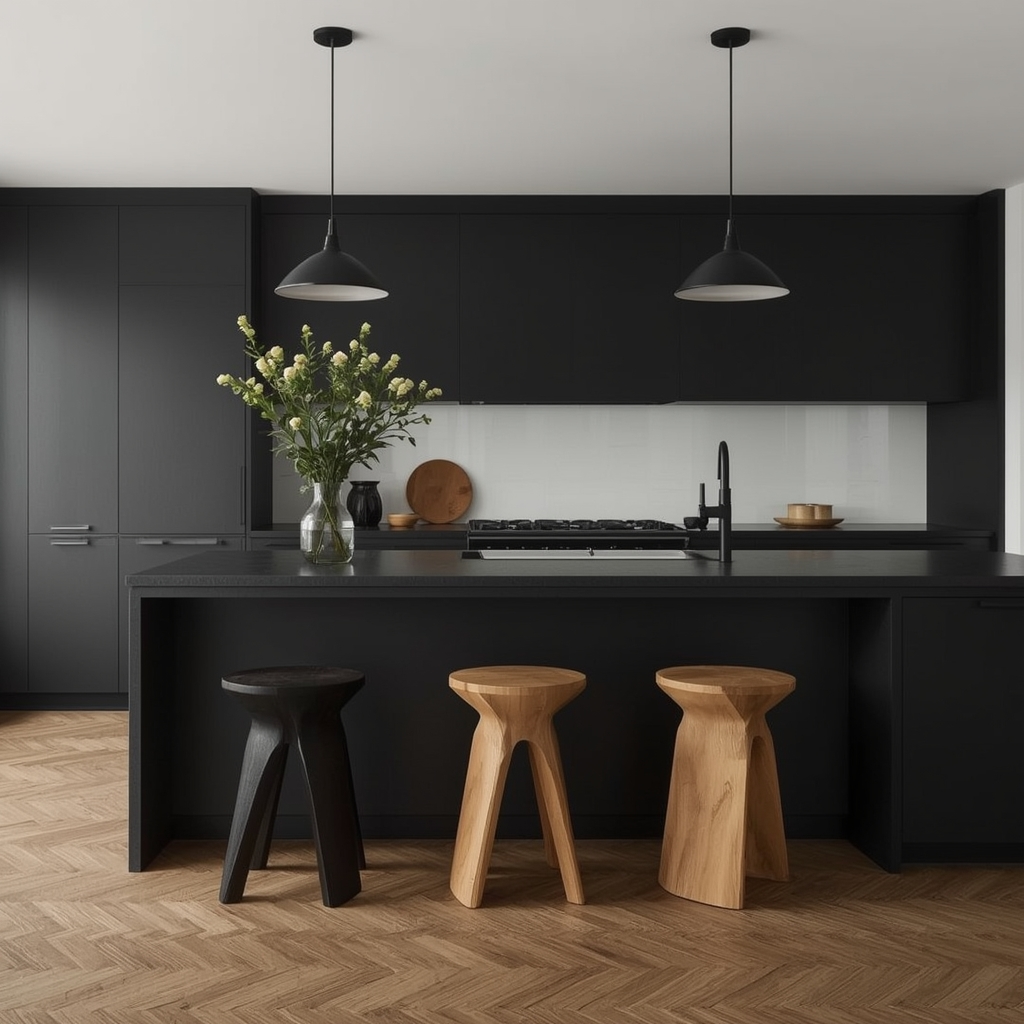
Instead of bulky chairs, use minimalist stools with sculptural qualities. Black or natural wood stools with organic curves embody the Japanese appreciation of craftsmanship while fitting neatly under the island. This functional seating doubles as an aesthetic feature in the kitchen.
FAQs about Black Japandi Kitchen
Q1: Is a black Japandi kitchen practical for everyday cooking?
Yes. With proper lighting, durable materials like stone countertops, and good ventilation, a black Japandi kitchen is both functional and stylish for daily use.
Q2: How do I prevent a black Japandi kitchen from looking too dark?
Balance black surfaces with natural wood, layered lighting, and neutral textiles. Adding plants also softens the overall look.
Q3: What flooring works best in a black Japandi kitchen?
Light or medium-tone hardwood flooring complements black cabinetry, maintaining warmth and balance. Polished concrete is also a strong option for modern minimalism.
Q4: Can I mix black with other colors in Japandi style?
Yes. While black anchors the design, soft neutrals, warm woods, and occasional muted earthy tones can be layered in for harmony.
Q5: Is open shelving necessary in a Japandi kitchen?
Not mandatory, but it enhances the airy and intentional look. If clutter is a concern, combine closed cabinets with a few open shelves for balance.
Final Thoughts on Designing a Black Japandi Kitchen
A black Japandi kitchen is more than just a design trend—it’s a philosophy of simplicity, balance, and elegance. The blend of Scandinavian minimalism and Japanese restraint creates a space that feels both bold and calming.
By incorporating natural wood, matte finishes, and intentional styling, you can achieve a kitchen that stands the test of time. Whether through cabinetry, lighting, or subtle decor, the essence of Japandi lies in finding harmony between functionality and beauty.