Japandi Bedroom: 15 Detailed Ideas to Create a Harmonious Space
The Japandi bedroom style has become one of the most sought-after interior design trends in recent years. Combining the minimalist elegance of Japanese design with the warm functionality of Scandinavian interiors, Japandi offers a balanced aesthetic that emphasizes simplicity, natural materials, and cozy comfort. If you’re looking to transform your bedroom into a tranquil retreat where every detail feels intentional, Japandi might be the perfect design language for you.
In this article, we’ll explore 15 detailed ideas to design a Japandi bedroom, ensuring your space feels modern, cozy, and timeless. Each idea will focus on functionality, aesthetics, and real-life adaptability, making it easy to recreate the look in your own home.
Natural Wood Elements in a Japandi Bedroom
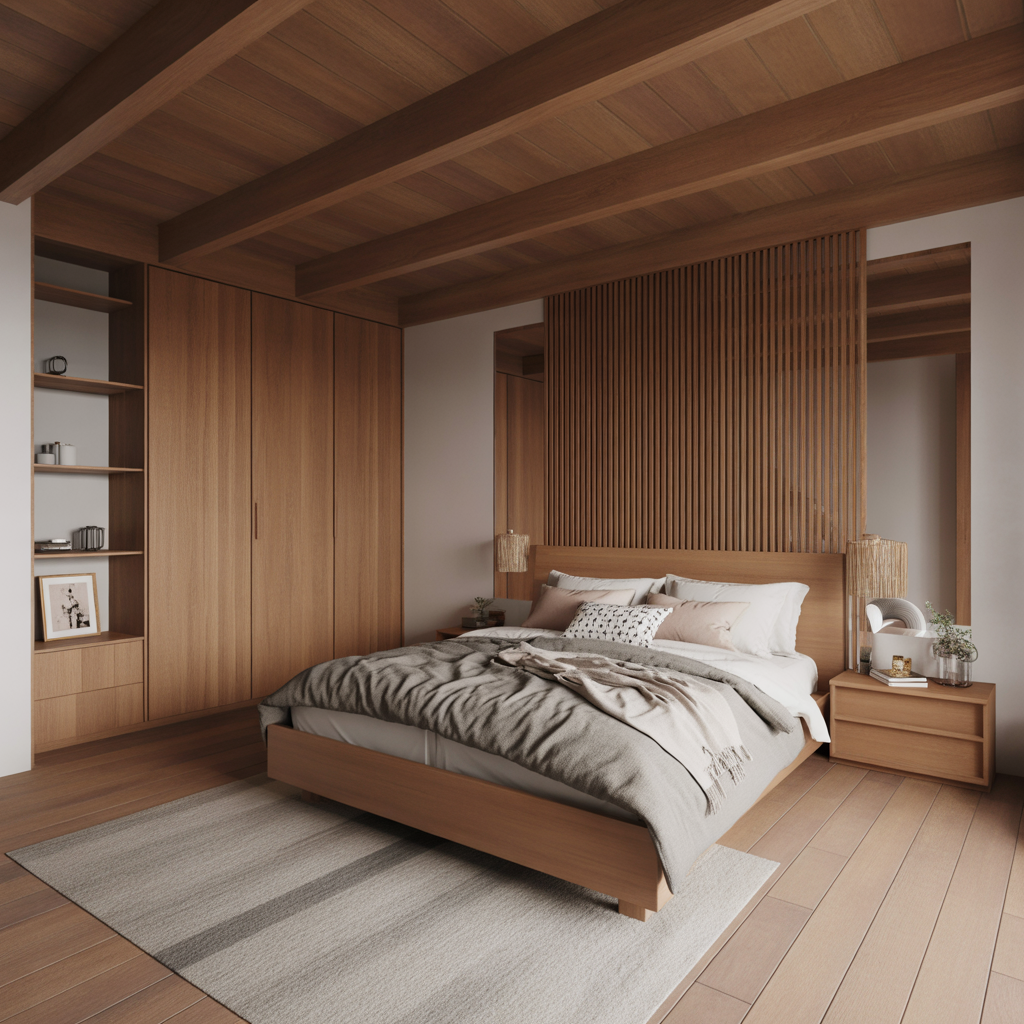
One of the strongest foundations of Japandi design is the use of natural wood. Whether it’s light oak or deeper walnut tones, natural wood creates a sense of warmth and connection to nature. In a Japandi bedroom, you can use wood in your bed frame, nightstands, flooring, or even wall paneling. The Japanese side of Japandi favors darker, rich tones while the Scandinavian style leans toward light woods, so mixing the two can create a balanced look.
Adding wooden ceiling beams or slatted wooden headboards can also enhance texture and depth. To avoid clutter, let the wood speak for itself—keep other elements minimal and neutral, allowing the wooden details to be the focal point. This not only enhances serenity but also creates a natural, grounded atmosphere that feels timeless.
Neutral Color Palette for a Japandi Bedroom
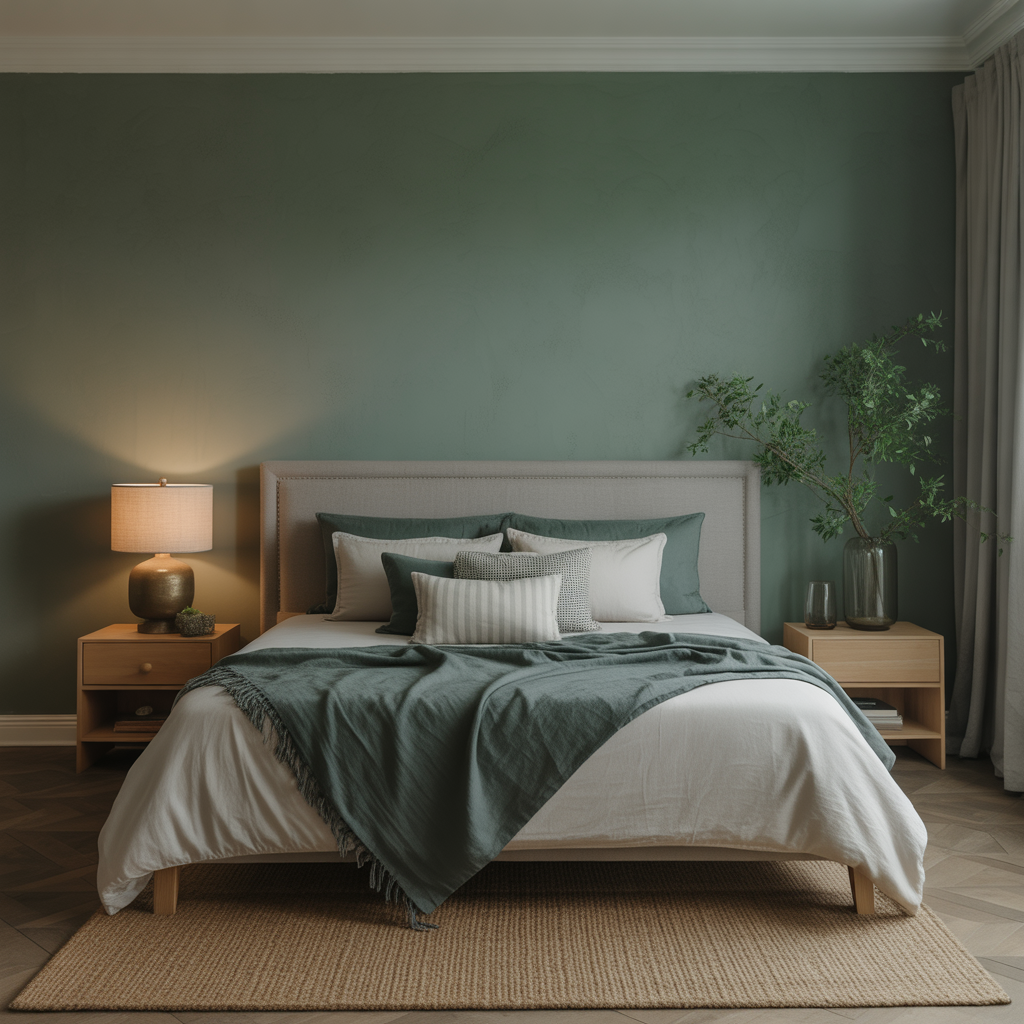
The Japandi style thrives on neutral, earthy color schemes. A Japandi bedroom should feel calm and uncluttered, so shades like beige, off-white, taupe, gray, and muted greens or browns work best. These colors reflect both the Japanese Zen aesthetic and the Scandinavian hygge-inspired coziness.
Incorporating muted tones on walls and bedding helps establish a tranquil vibe. You can add slight contrast with charcoal grays or deep forest greens for accent pieces like throws, pillows, or rugs. The goal is not to overwhelm the space but to maintain harmony, where every shade contributes to an overall feeling of peace and relaxation.
Minimalist Furniture with Japandi Influence
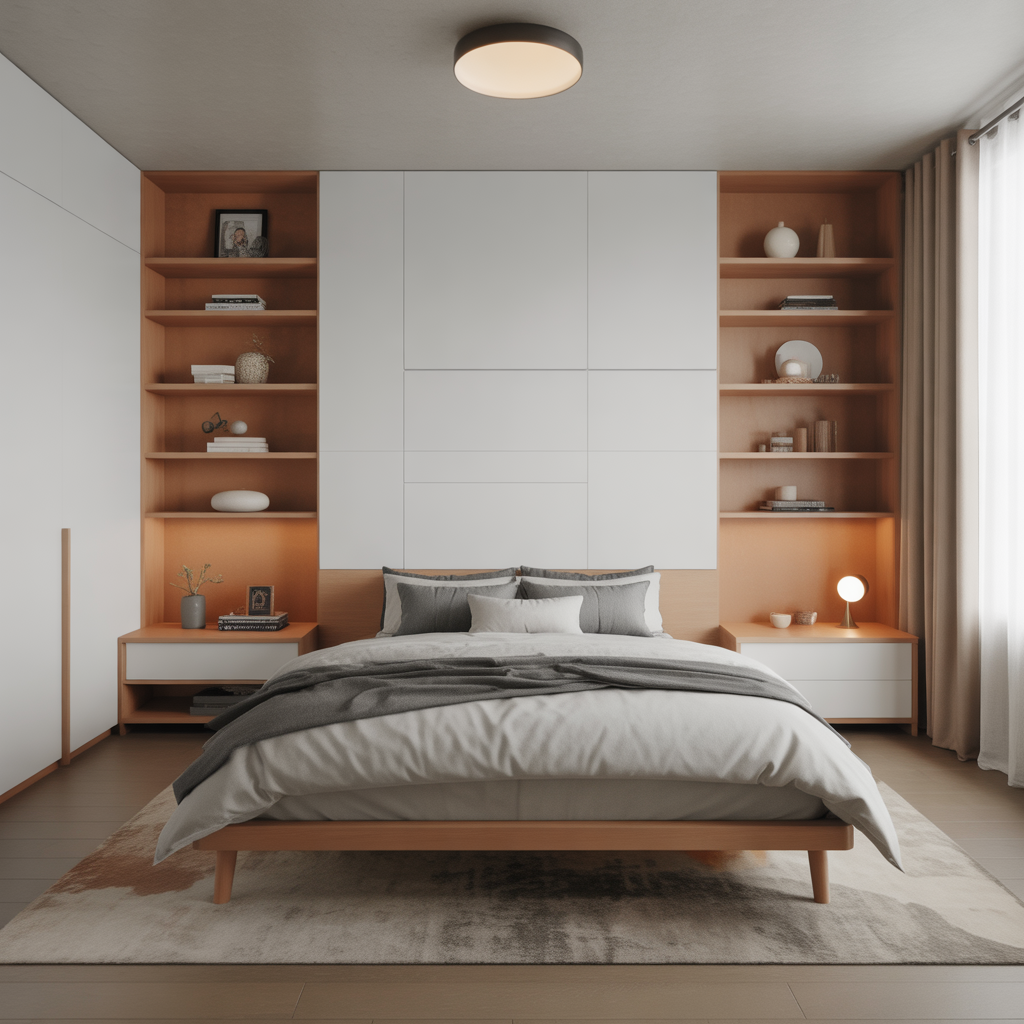
Japandi bedroom design prioritizes furniture that is simple, functional, and sleek. Avoid ornate or bulky pieces—opt instead for low-profile beds, clean-lined wardrobes, and multipurpose storage solutions. Japanese minimalism leans toward refined, practical pieces, while Scandinavian design ensures comfort is never sacrificed.
Choose a bed frame that sits low to the ground to mimic Japanese tatami-style sleeping, then balance it with cozy Scandinavian-style bedding. Floating nightstands or slim-legged dressers can further enhance the sense of lightness and openness, ensuring your bedroom feels airy rather than cramped.
Layered Textures for Comfort and Depth
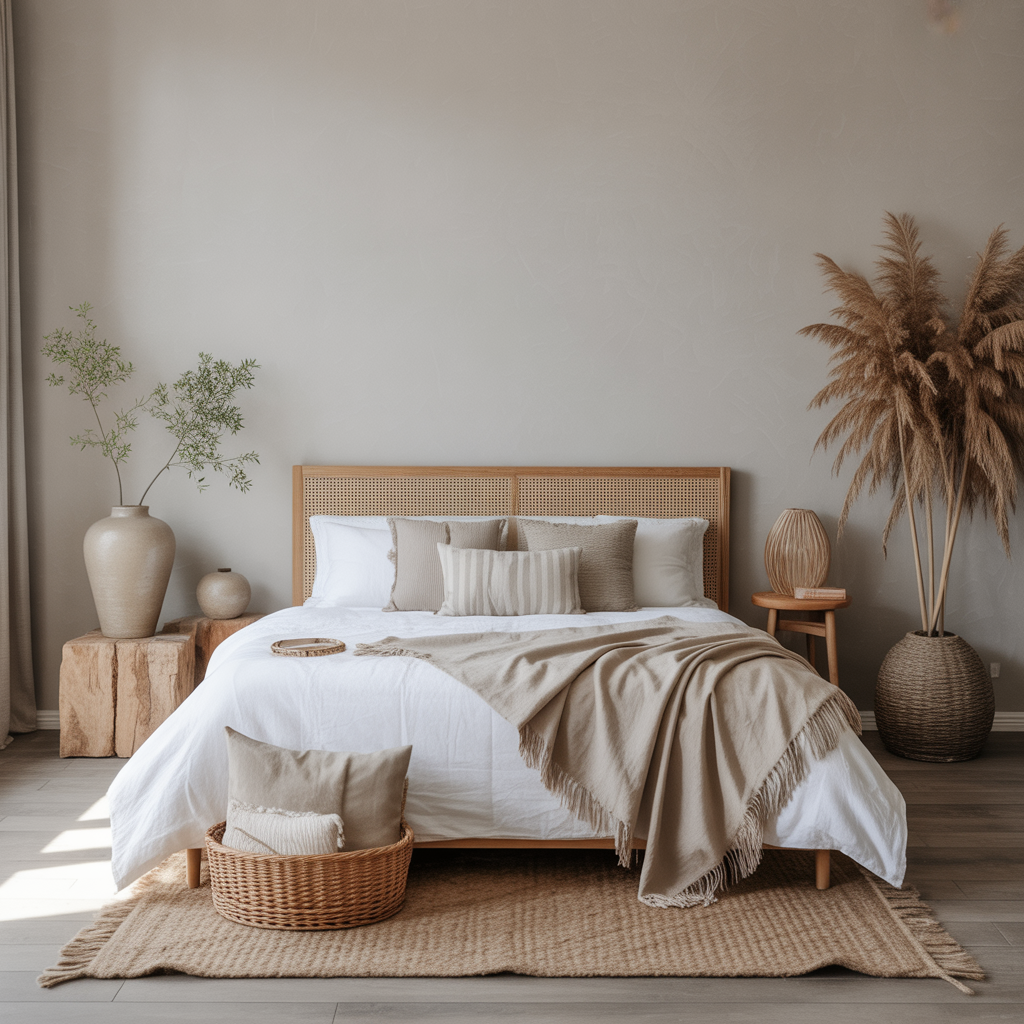
Even though Japandi style emphasizes minimalism, it doesn’t mean your Japandi bedroom should feel cold or stark. Layered textures add warmth and make the room feel lived-in while keeping the aesthetic cohesive. Combine linen bedding, cotton throws, and wool rugs to introduce cozy softness.
Textured ceramic vases, woven baskets, and natural fiber rugs can all work as subtle accent pieces. The interplay of smooth wood, soft fabrics, and tactile accessories creates balance and interest, ensuring that minimalism doesn’t feel monotonous. Adding texture is especially important in colder climates where coziness is essential.
Indoor Plants for a Japandi Bedroom
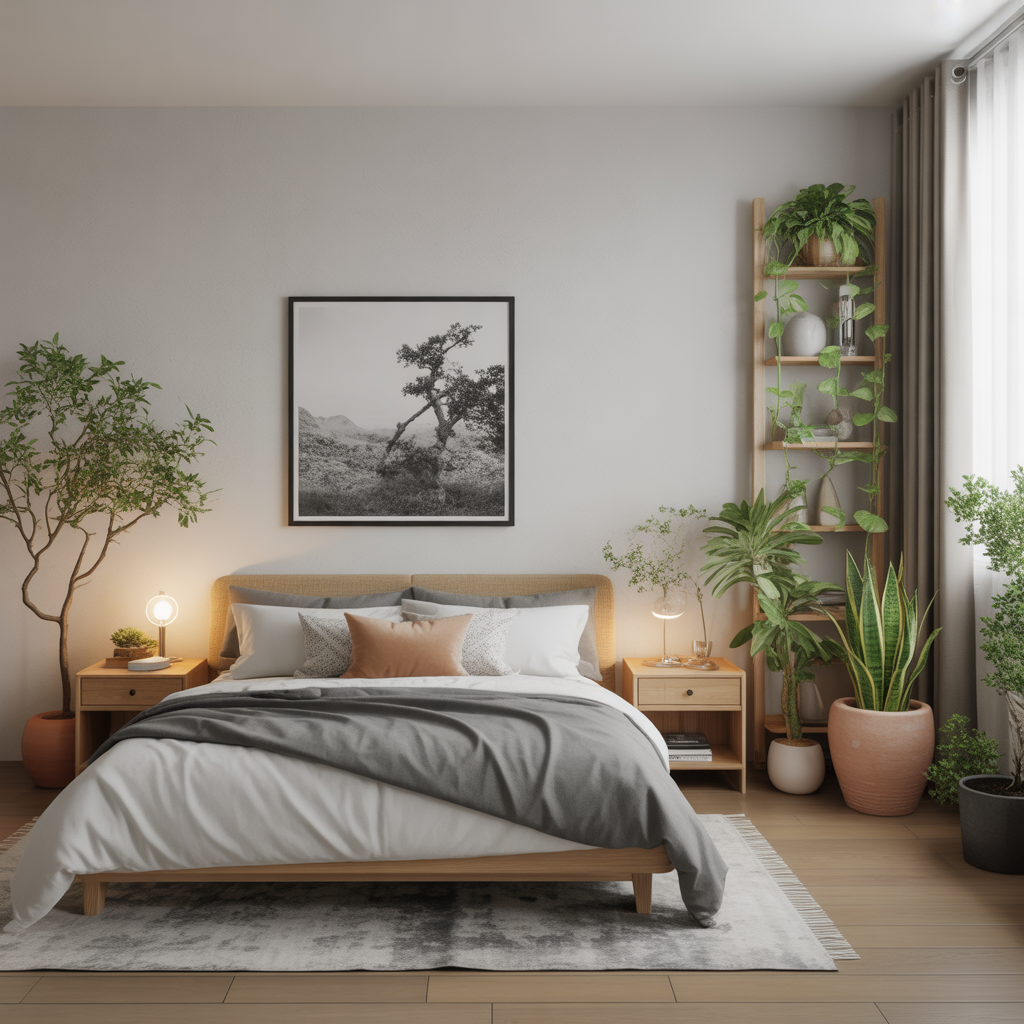
Plants are central to Japandi design as they bring nature indoors and emphasize the connection to the outside world. A Japandi bedroom with greenery feels refreshing and balanced, combining the Japanese principle of Wabi-Sabi with Scandinavian love for natural living.
Opt for low-maintenance indoor plants such as snake plants, bonsai trees, or peace lilies. Place them in neutral-toned ceramic or terracotta pots that blend seamlessly with the room’s palette. Avoid over-cluttering the room with plants; instead, use them intentionally to bring life and calm energy into the space.
Low-Profile Japandi Style Beds
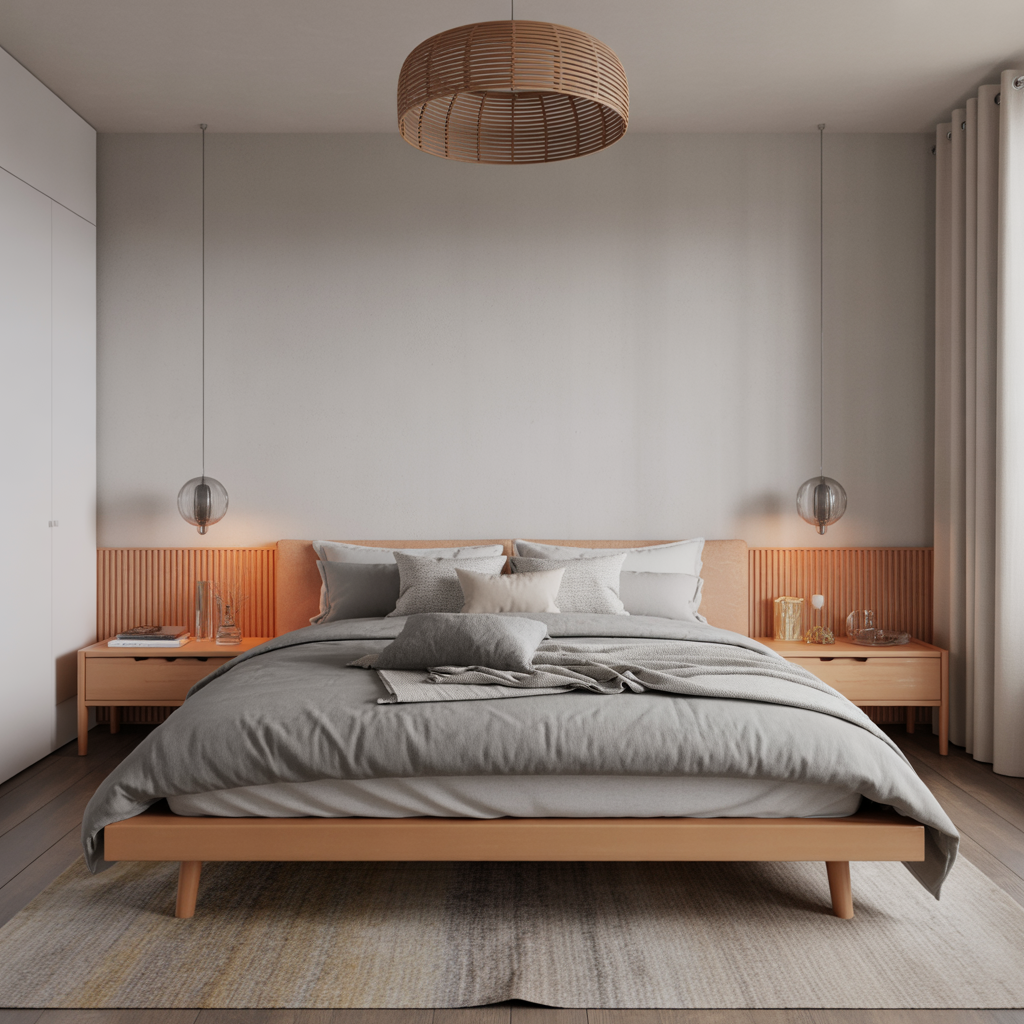
A Japandi bedroom often features beds that sit close to the floor, inspired by Japanese futon traditions. Low-profile beds create an open and grounded feeling, giving the illusion of higher ceilings and a more expansive space. Scandinavian influence comes through with cozy bedding layers, cushions, and soft throws that make the bed inviting.
To enhance the minimalist look, avoid bulky headboards and instead choose simple wooden frames or slatted designs. The combination of sleek design and warm textures ensures the bed remains the centerpiece of the bedroom without overwhelming the room.
Functional Storage Solutions in Japandi Bedroom Design
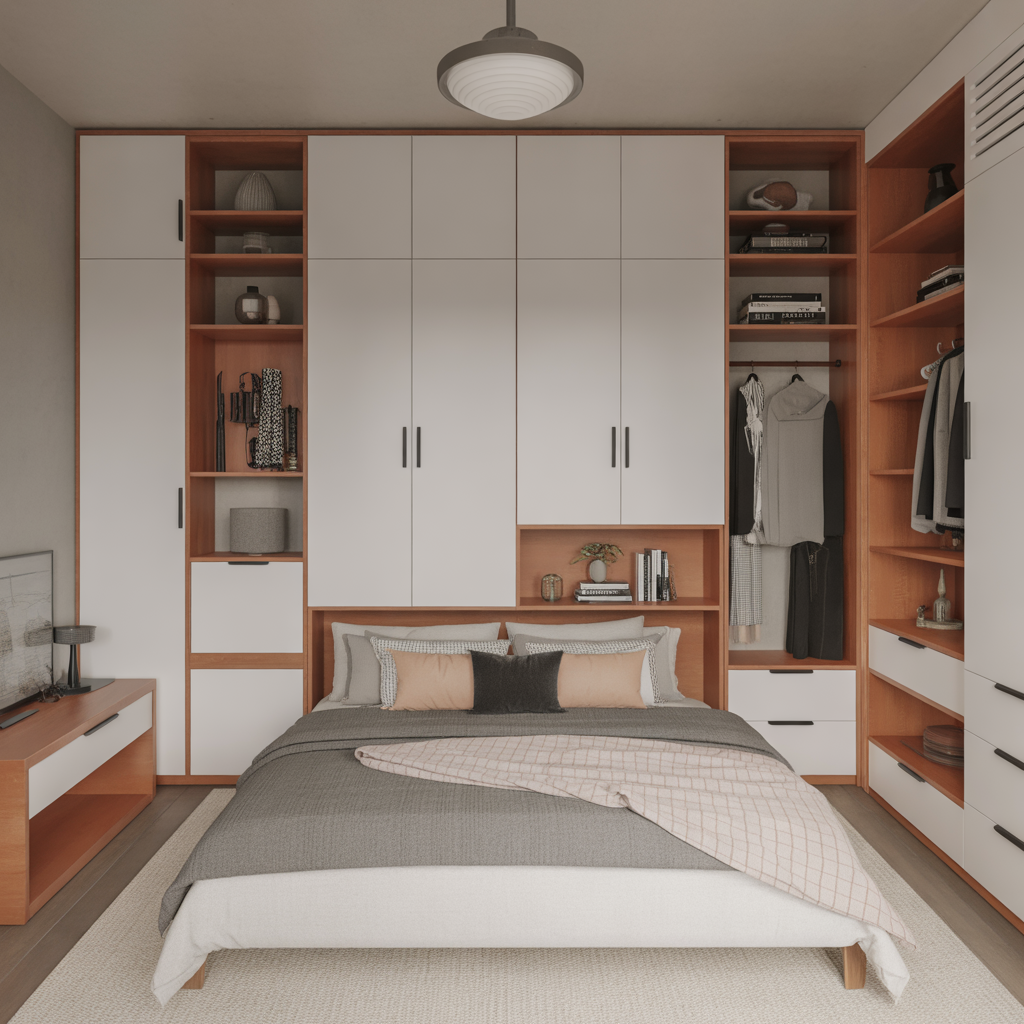
Clutter is the enemy of Japandi style, so intelligent storage solutions are a must. In a Japandi bedroom, storage should be functional but discreet. Scandinavian design prioritizes practicality, while Japanese interiors emphasize clean lines and order.
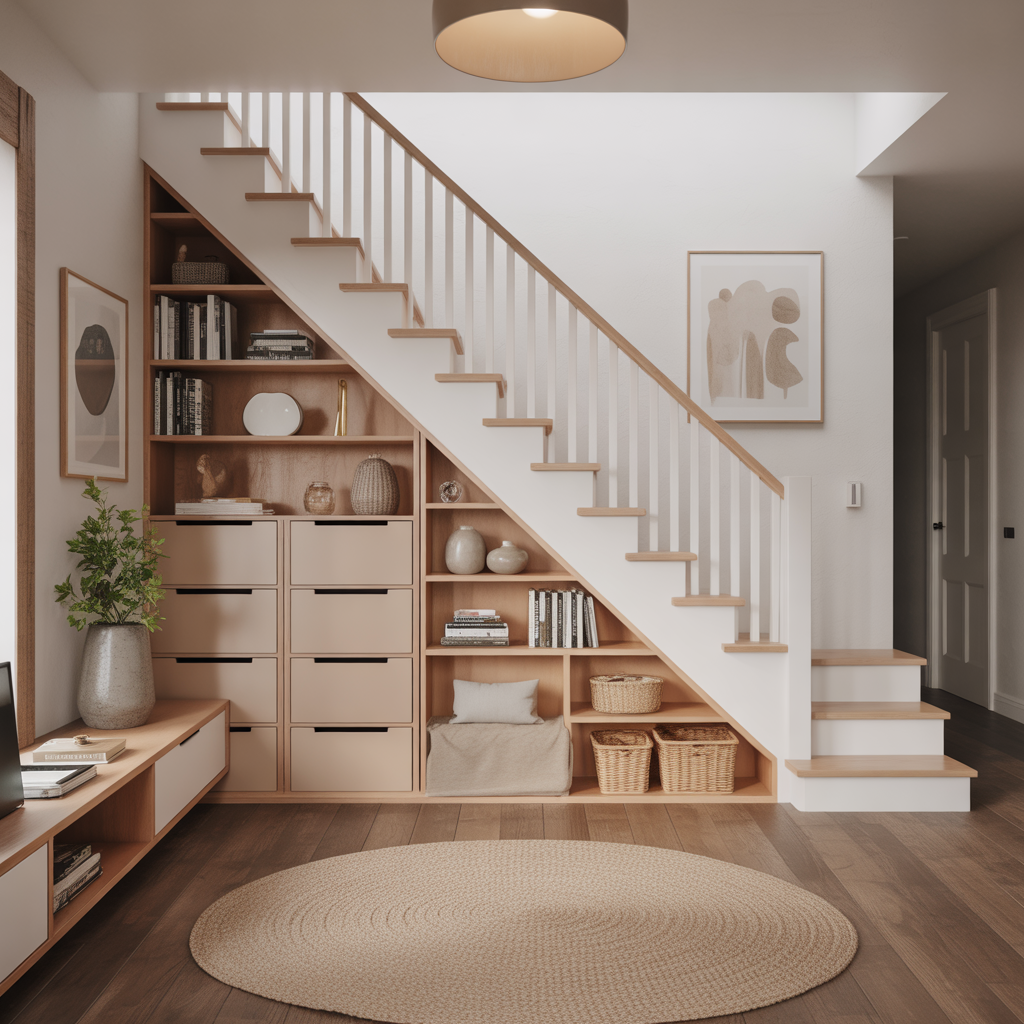
Consider under-bed storage, hidden drawers, or built-in wardrobes with sliding doors that save space while maintaining a clean aesthetic. Storage pieces should ideally be made of wood or finished in neutral tones to blend seamlessly into the room without drawing attention away from the main design elements.
Soft Lighting for a Japandi Bedroom
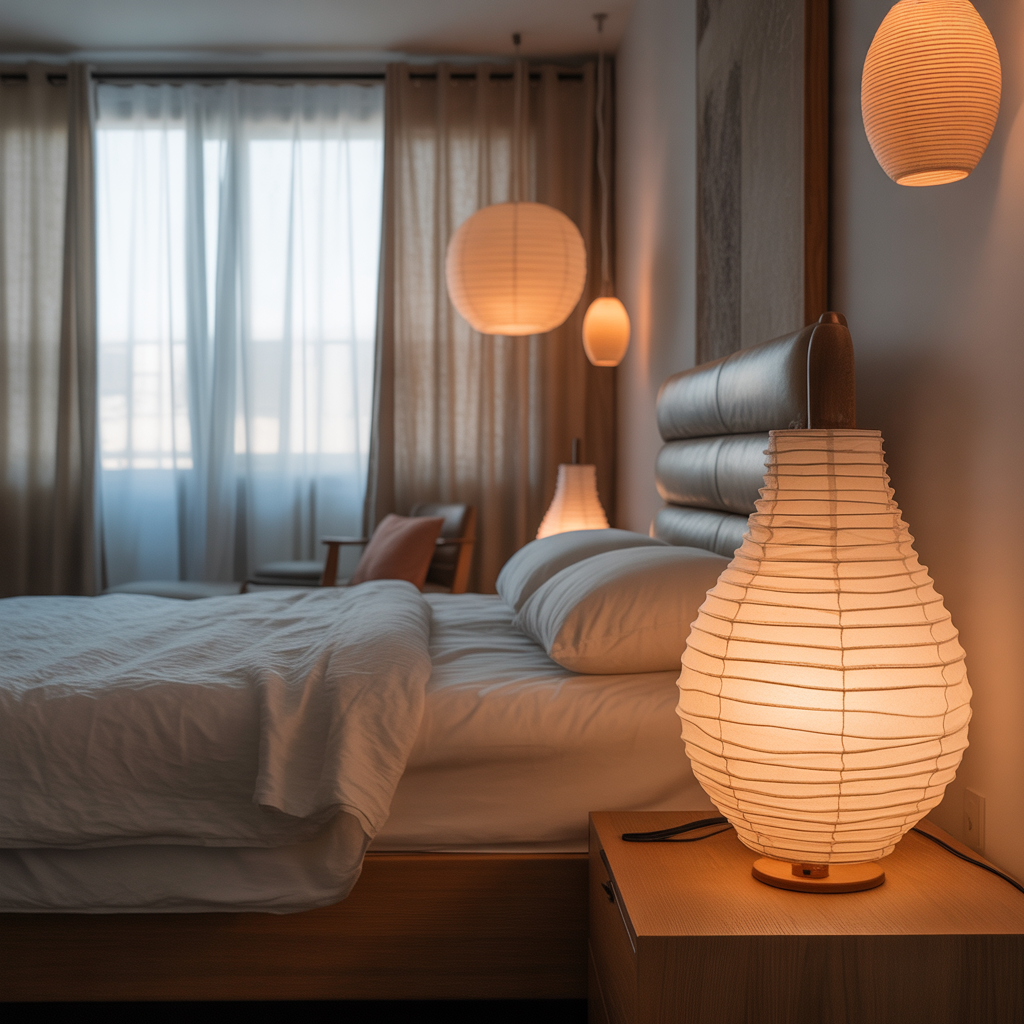
Lighting plays a crucial role in creating ambiance. A Japandi bedroom should avoid harsh, direct light and instead focus on soft, layered illumination. Natural light during the day is essential, so sheer curtains can diffuse brightness while still letting sunlight in.
In the evening, incorporate warm, low-light sources such as paper lanterns, pendant lights, or table lamps with soft fabric shades. These lighting choices highlight textures and create an inviting atmosphere. Consider dimmable lighting to adapt the brightness based on mood and function, enhancing relaxation before sleep.
Incorporating Wabi-Sabi Aesthetics
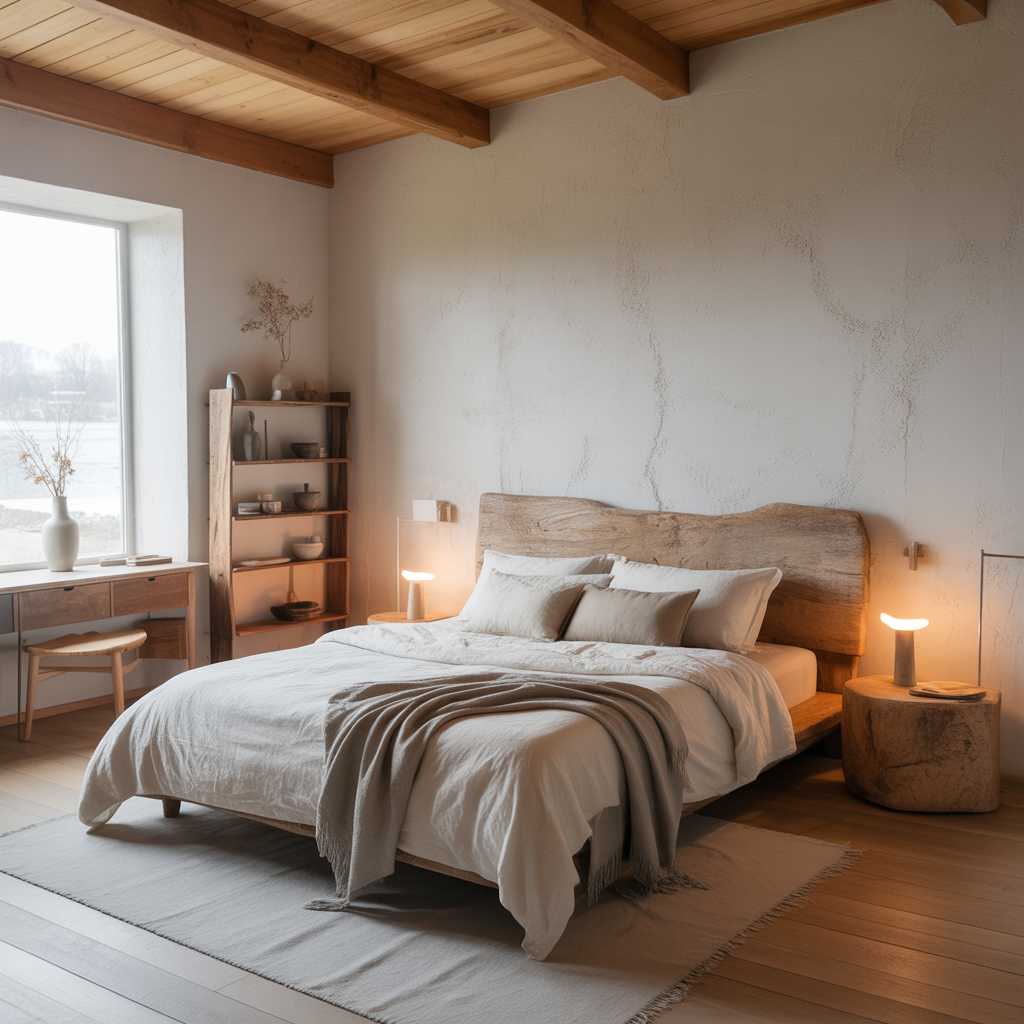
The Japanese philosophy of Wabi-Sabi celebrates imperfection, simplicity, and natural beauty. In a Japandi bedroom, this can mean incorporating handcrafted furniture, ceramic pieces with subtle imperfections, or reclaimed wood that tells a story.
Scandinavian design values craftsmanship and authenticity, so combining these principles ensures your bedroom feels soulful and grounded. Rather than striving for sterile perfection, embrace small irregularities that make the space unique and personal. This approach ensures your Japandi bedroom feels warm, authentic, and lived-in rather than staged.
Japandi-Inspired Art and Decor
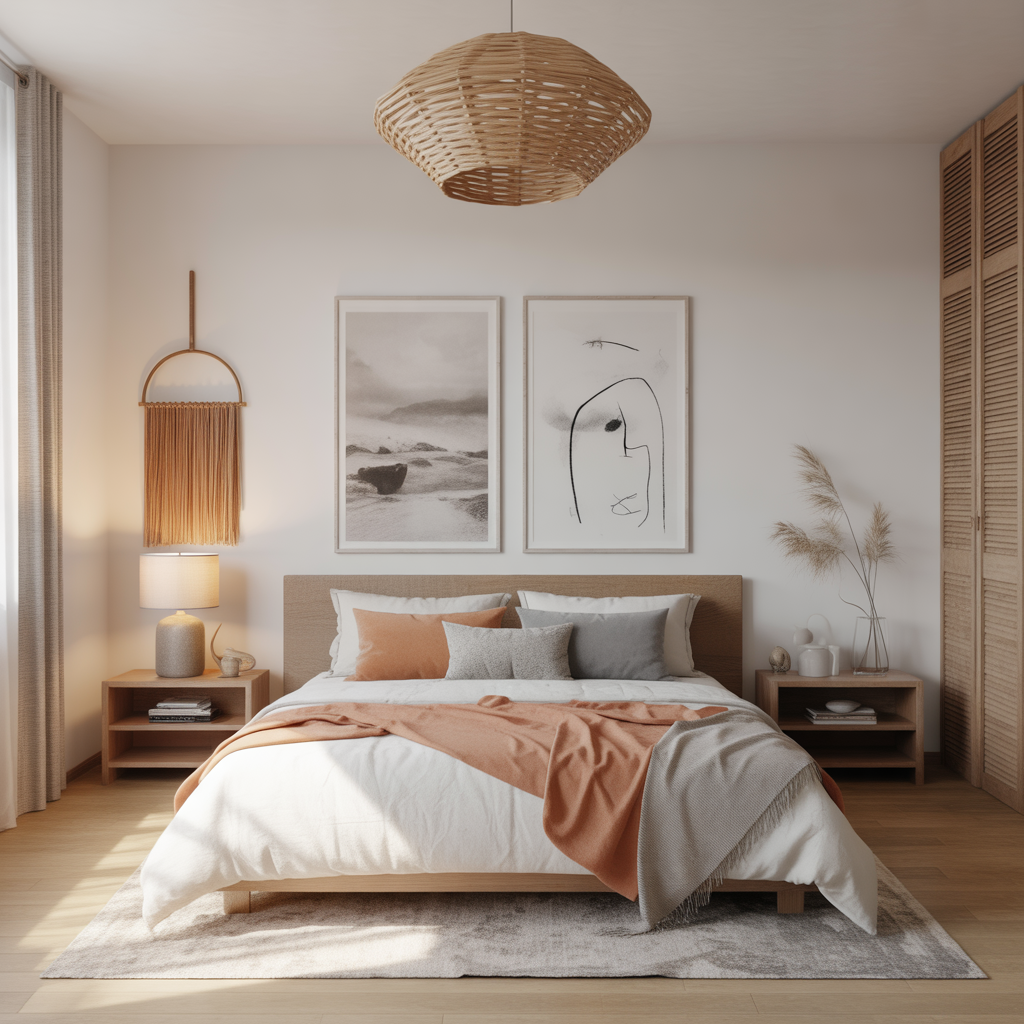
While Japandi design is minimalist, carefully chosen art and decor can enhance the room’s personality. Stick to simple, abstract art with muted tones or nature-inspired pieces like landscapes, line drawings, or ink paintings.
Avoid filling the walls with too many decorations. Instead, select one or two statement pieces that create visual interest without overwhelming the space. Handmade ceramics, woven wall hangings, or a single large piece of minimalist artwork above the bed can perfectly capture the Japandi aesthetic.
Cozy Rugs in Japandi Bedroom Design
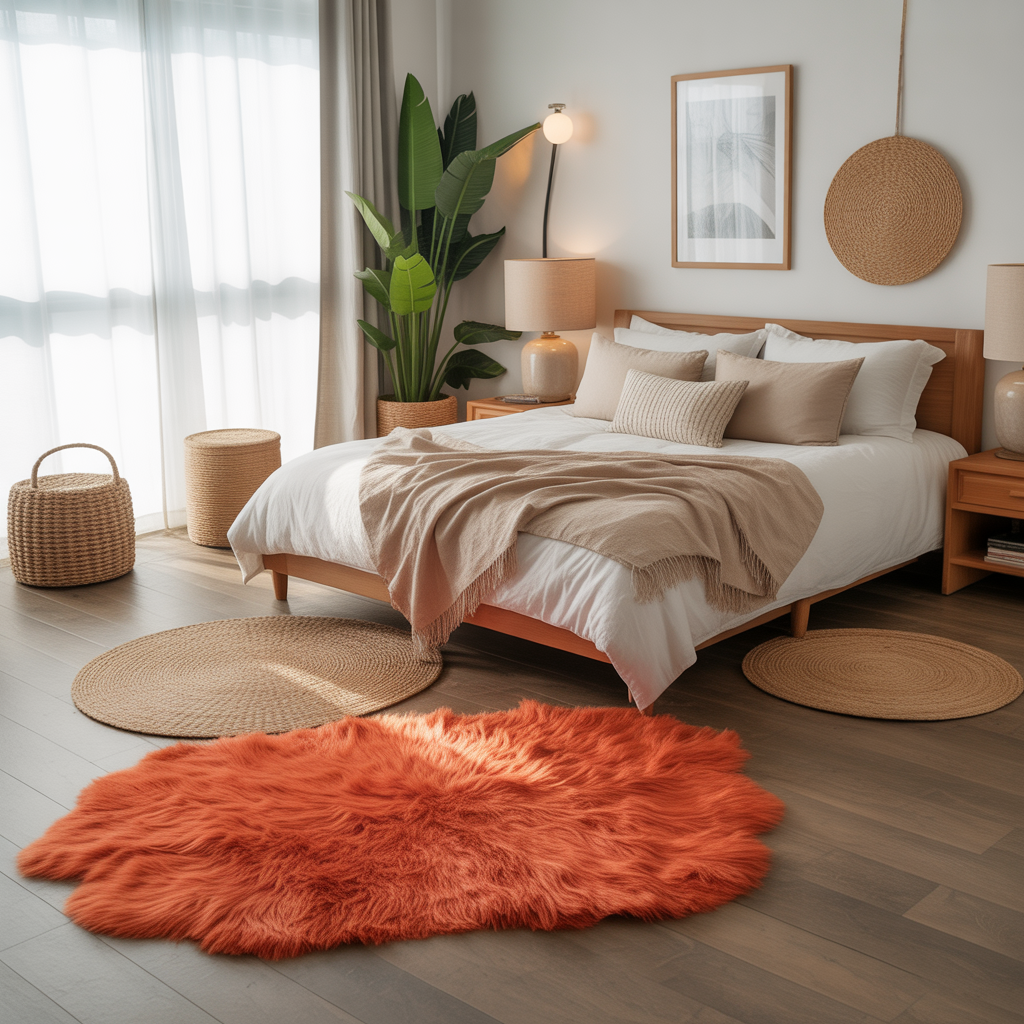
Rugs add warmth, texture, and comfort underfoot—an important feature in a Japandi bedroom. Opt for natural materials like wool, jute, or cotton in muted or neutral shades. These materials add a sense of grounding and tactile comfort while staying true to the minimalistic theme.
Layering rugs is another way to introduce depth. For example, a large neutral wool rug can serve as a base, with a smaller textured jute rug layered on top to create contrast. Rugs also help define the sleeping area, especially in open-plan spaces or studio apartments.
Statement Lighting Fixtures for Japandi Style
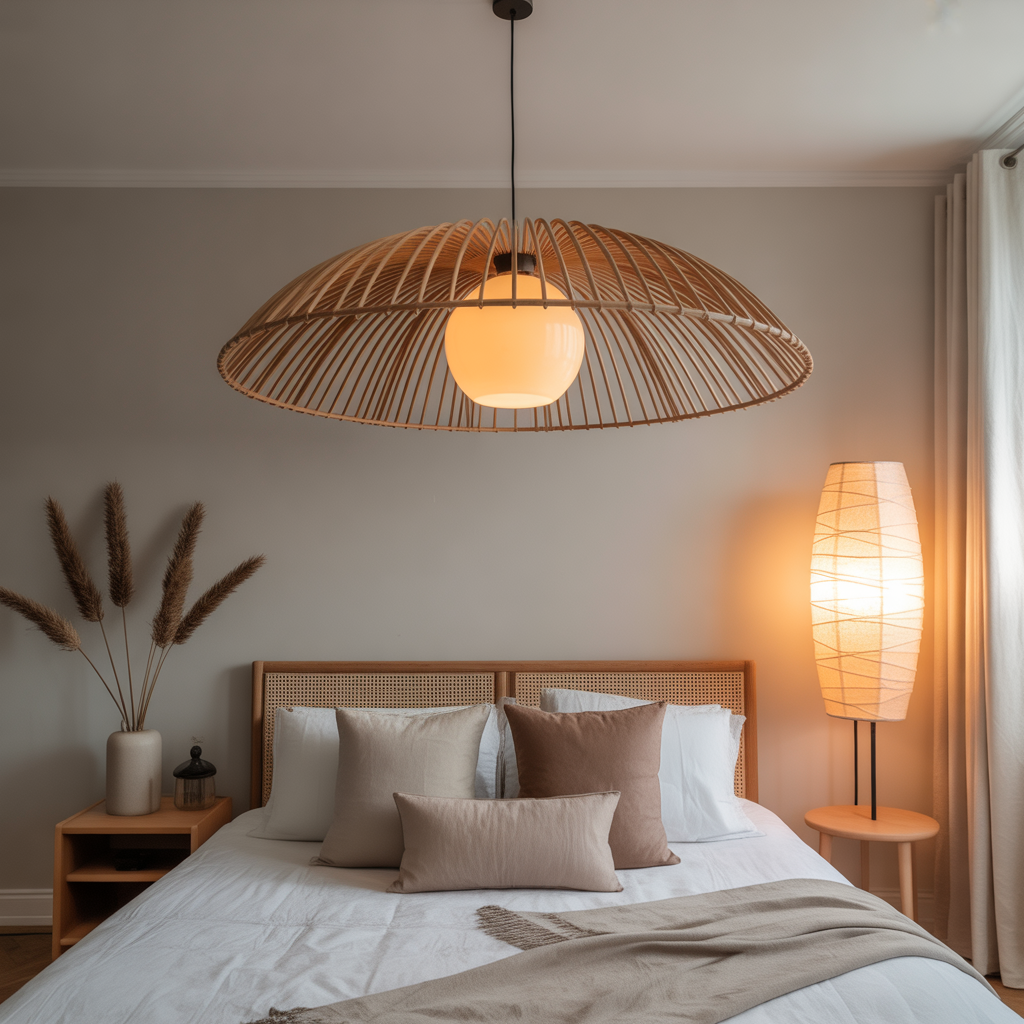
Although minimalism dominates Japandi interiors, a carefully selected statement light fixture can elevate the design. Oversized pendant lamps, woven rattan shades, or sculptural wooden lights add a touch of character without breaking harmony.
These fixtures not only serve as functional light sources but also as design elements that highlight the balance between Scandinavian coziness and Japanese simplicity. The key is to keep the fixture elegant, natural, and aligned with the overall muted color palette.
Sustainable and Eco-Friendly Materials
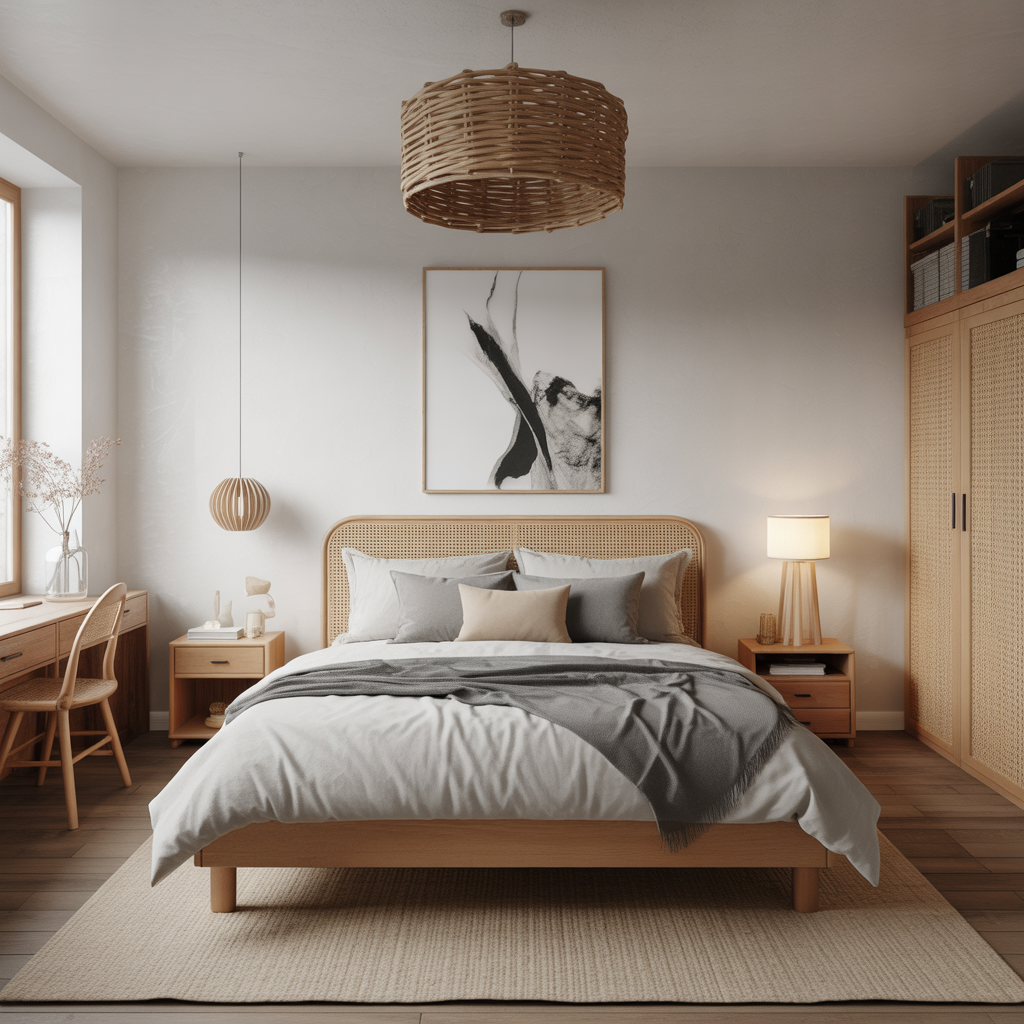
Sustainability is at the heart of both Japanese and Scandinavian traditions. A Japandi bedroom benefits greatly from eco-friendly materials such as bamboo, reclaimed wood, organic cotton, and natural stone. Not only do these materials look beautiful, but they also support mindful and conscious living.
Opt for sustainable furniture brands or secondhand finds that align with Japandi principles. Reusing and recycling materials adds a Wabi-Sabi touch, making the room more meaningful. This sustainable approach ensures your Japandi bedroom is both stylish and environmentally responsible.
A Calming Reading Nook in Japandi Bedroom
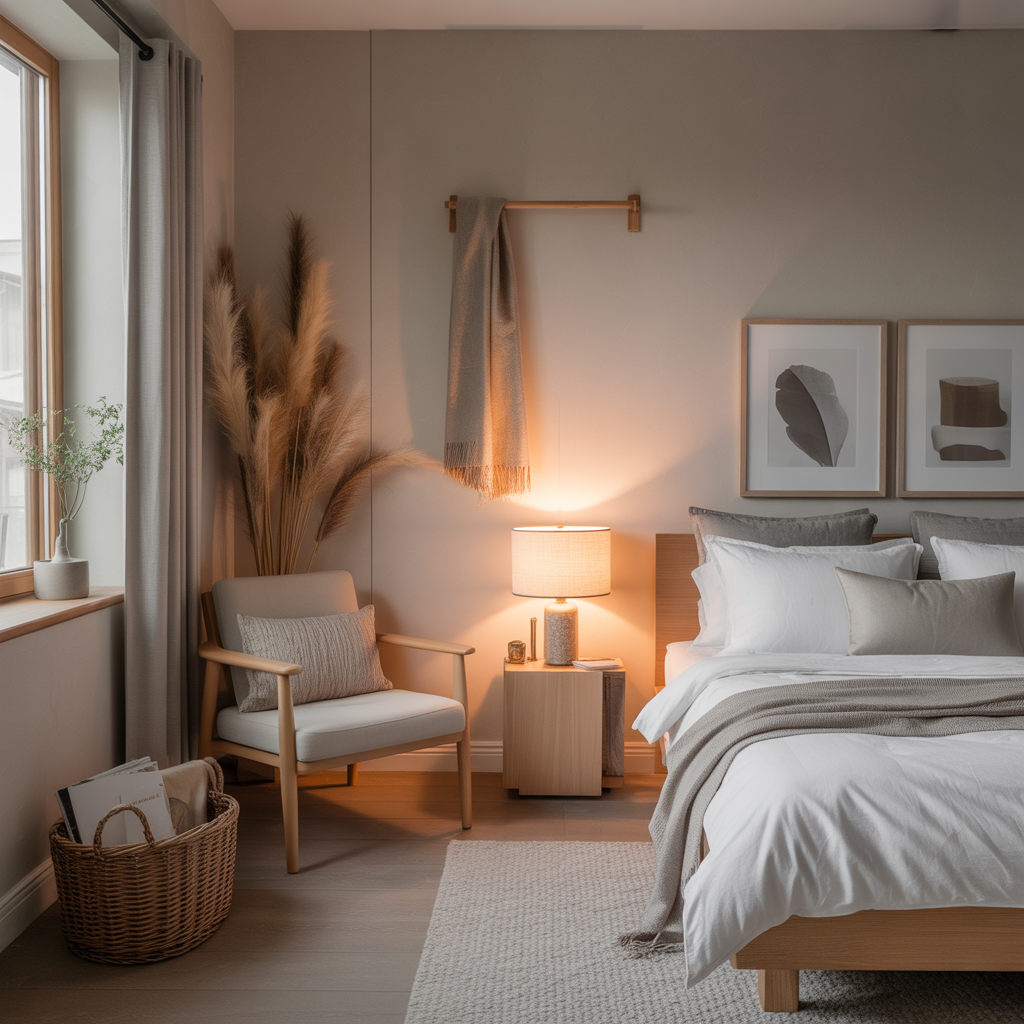
A Japandi bedroom should offer more than just a place to sleep—it should be a sanctuary for relaxation. Creating a small reading nook with a low chair, a soft throw, and warm lighting can add an extra layer of coziness.
Choose a minimalist armchair in wood or linen, pair it with a simple side table, and place it near a window or corner of the room. Add a woven basket for blankets or magazines, and you’ll have a functional yet calming retreat that enhances your Japandi bedroom’s versatility.
Sliding Screens and Room Dividers in Japandi Bedroom Design
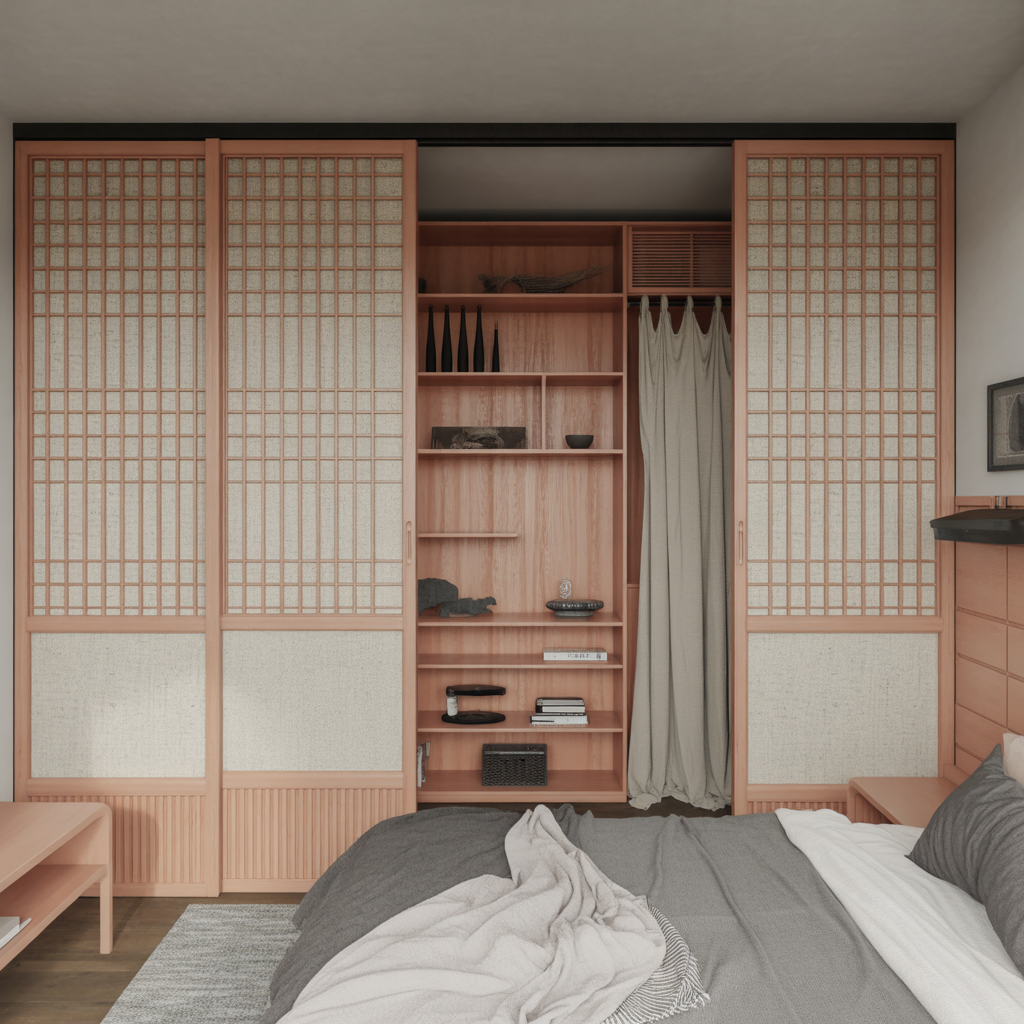
One powerful way to bring more authenticity to a Japandi bedroom is by using sliding screens or room dividers. Inspired by traditional Japanese shoji screens, these elements add architectural interest while maintaining a minimalist feel. Modern versions often use wood frames with glass, linen, or paper-style inserts that let light filter through softly. Room dividers can serve multiple purposes: they provide privacy in open layouts, separate sleeping areas from small work nooks, or simply act as a decorative element.
FAQs about Japandi Bedroom Design
What is the main difference between Japandi and minimalist design?
Minimalist design often focuses on stripping everything down to essentials, sometimes resulting in stark spaces. Japandi, however, combines minimalism with warmth—using natural textures, cozy elements, and earthy tones to create a more inviting atmosphere.
Can I mix darker colors into a Japandi bedroom?
Yes, darker shades such as charcoal, deep brown, or forest green can be incorporated, especially through accent pieces. The key is balance—pairing darker tones with lighter neutrals to maintain harmony.
Is a Japandi bedroom suitable for small spaces?
Absolutely. Japandi design thrives in smaller spaces because it emphasizes functionality, clean lines, and minimal clutter. Low-profile furniture and smart storage make it an excellent choice for compact bedrooms.
What kind of flooring works best in a Japandi bedroom?
Natural wood flooring, either light Scandinavian oak or darker Japanese-inspired woods, works best. If wood isn’t an option, stone or bamboo flooring also complements the Japandi style beautifully.
How can I make my Japandi bedroom feel cozier without breaking the minimalist vibe?
Layer textures with soft rugs, linen bedding, wool throws, and subtle lighting. Adding greenery and carefully chosen decor pieces also makes the space feel warm while keeping clutter at bay.
Final Thoughts on Creating a Japandi Bedroom
Designing a Japandi bedroom is about finding balance—between minimalism and coziness, between light and dark, between function and beauty. By incorporating natural materials, a neutral color palette, layered textures, and intentional decor, you can create a bedroom that feels both calming and practical.
The beauty of Japandi lies in its timelessness. It’s not a fleeting trend but a design philosophy that prioritizes mindfulness, simplicity, and comfort. Whether you live in a small apartment or a spacious home, Japandi bedroom design offers a universal approach to creating a restful sanctuary where harmony and comfort coexist.